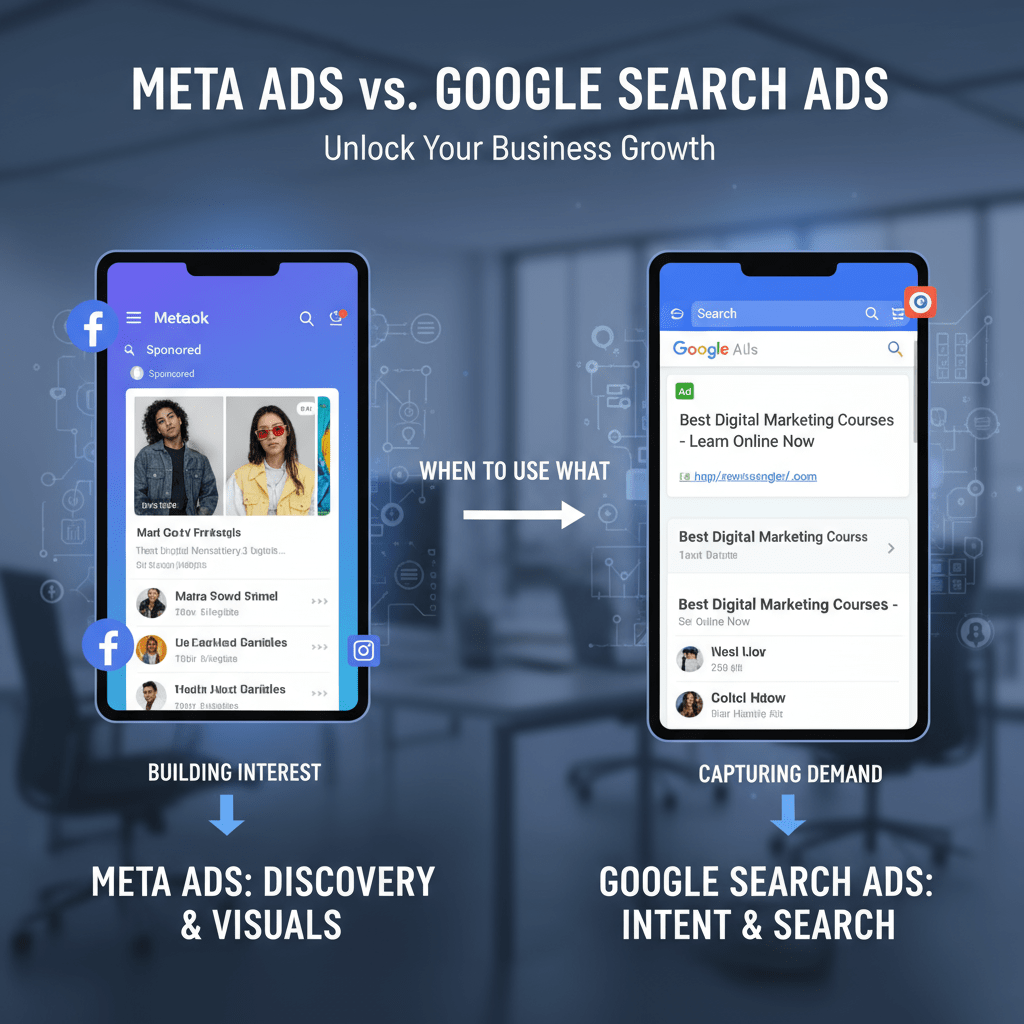
Meta Ads vs Google Ads: When to Use What
Meta Ads vs Google Ads: When to Use What
Ever felt like you’re caught in a digital marketing dilemma? You’ve heard all the buzz about online advertising, but when it comes to choosing between Meta Ads vs Google Ads, it can feel like comparing apples and oranges, right? Both platforms are incredibly powerful, reaching billions of users worldwide, but they operate on fundamentally different principles. So, how do you decide which one is right for your business, or even better, how do you make them work together?
This isn’t just about spending money; it’s about investing strategically to get the best return on your advertising dollar. Understanding the nuances of Meta Ads vs Google Ads is crucial for crafting an effective digital marketing strategy that truly drives results. Let’s dive in and demystify these digital giants!
Table of Contents
- Introduction to Meta Ads
- Introduction to Google Search Ads
- Key Differences: Meta Ads vs Google Ads
- Advantages & Disadvantages of Meta Ads
- Advantages & Disadvantages of Google Search Ads
- When to Use What: Crafting Your Strategy
- FAQ
- Conclusion
Introduction to Meta Ads
When we talk about Meta Ads, we’re primarily referring to advertising on Facebook and Instagram, along with their extended network like Messenger and Audience Network. Think of it as a vast digital playground where billions of people spend their free time. Meta’s advertising approach is all about discovery and demand generation.
How Meta Ads Work
Instead of people actively searching for something, Meta Ads appear in their feeds, stories, and sidebars as they browse content, connect with friends, and scroll through their daily lives. It’s like having a billboard placed directly in front of someone interested in what you offer, even if they weren’t looking for it that exact moment.
- Interest-Based Targeting: Meta excels at allowing you to target users based on their demographics, interests, behaviors, and connections. This means you can show your ads to people who’ve shown an interest in similar products or services, even if they’ve never heard of you.
- Visual Storytelling: With a heavy emphasis on images and videos, Meta Ads are perfect for engaging users visually and telling a compelling brand story.
- Building Brand Awareness: These ads are fantastic for introducing your brand to new audiences and building a strong presence in their minds.
Introduction to Google Search Ads
Now, let’s pivot to Google Search Ads, which fall under the umbrella of Google Ads (a much larger platform that also includes Display, YouTube, and Shopping Ads). For the purpose of our Meta Ads vs Google Ads comparison, we’ll focus on Search Ads. This platform operates on the principle of intent and demand fulfillment.
How Google Search Ads Work
Imagine someone types “best waterproof hiking boots” into Google. They’re actively searching for a solution, right? Google Search Ads allow your business to appear at the top of these search results, directly in front of someone who has a clear, immediate need or question. It’s like having your store appear at the exact moment a customer walks in asking for a specific item.
- Keyword Targeting: Google Ads are driven by keywords. You bid on terms that users are likely to search for when looking for your products or services.
- High User Intent: People using Google Search are generally closer to making a purchase or finding immediate information, which often translates to higher conversion rates for well-optimized campaigns.
- Text-Based Dominance: While Google has visual components (like Shopping Ads), the core of Search Ads is text-based – a compelling headline and description are key.
Key Differences: Meta Ads vs Google Ads
So, we’ve touched on their individual strengths, but what truly separates Meta Ads vs Google Ads at a fundamental level? It boils down to user intent and the stage of the customer journey.
Intent vs. Discovery
This is the biggest differentiator. Google customers are actively searching, meaning they have high purchase intent. They are at the bottom of the sales funnel. On the other hand, Meta users are relaxing or connecting, and your ads appear as a discovery. They are often earlier in the funnel, perhaps in the awareness or interest stage. According to a WordStream report, the average conversion rate for Google Search Ads across all industries is around 3.75%, highlighting that strong intent.
Audience Targeting vs. Keyword Targeting
- Meta Ads: Focus heavily on demographic, interest, and behavioral targeting. You create a profile of your ideal customer and Meta finds people matching that profile. This is fantastic for creating new demand or reaching niche audiences.
- Google Ads: Primary targeting is through keywords. You identify what phrases your potential customers use, and your ads appear when those phrases are searched. It’s about meeting existing demand.
Ad Format and Creative
The visual nature of Meta Ads allows for rich media like high-quality images, videos, and carousels, driving emotional connections. Google Search Ads are predominantly text-based, requiring concise, persuasive copywriting. While there are visual elements in Google Shopping and Display Ads, the core Search experience is textual.
Advantages & Disadvantages of Meta Ads
Every tool has its pros and cons, and Meta Ads are no different. Understanding these can help you decide when to prioritize them in your marketing mix.
The Upsides of Meta Ads
- Unmatched Audience Reach: With billions of users, Meta offers an unparalleled reach, allowing you to connect with almost any demographic worldwide. In 2024, Meta’s platforms collectively reached 3.07 billion users, a staggering number!
- Detailed Audience Targeting: The ability to target based on interests, behaviors, custom audiences, and lookalike audiences is incredibly powerful for precision marketing.
- Cost-Effective for Brand Awareness: Generating brand visibility and engagement can often be more cost-effective on Meta platforms compared to the higher competitive bids on Google Search for certain keywords.
- Visual Storytelling: Perfect for products or services that benefit from strong visual appeal, like fashion, food, travel, or home decor.
The Downsides of Meta Ads
- Lower Conversion Intent: Users are often not in a buying mindset, so conversion rates can be lower compared to search ads. You’re interrupting their experience, albeit with relevant content.
- Ad Fatigue: Users can quickly get tired of seeing the same ads, requiring constant creative refreshing.
- Platform Dependence: Algorithm changes can significantly impact campaign performance, requiring advertisers to adapt quickly.
Advantages & Disadvantages of Google Search Ads
Just like Meta, Google Search Ads come with their own set of benefits and drawbacks that shape their utility for various marketing objectives.
The Strengths of Google Search Ads
- High Conversion Potential: Thanks to high user intent, people searching on Google are often ready to buy, leading to better conversion rates for well-optimized campaigns.
- Immediate Results: When set up correctly, Google Search Ads can deliver traffic and leads almost instantly.
- Measurable ROI: The platform offers robust analytics, making it easy to track performance, measure ROI, and optimize your campaigns for conversion optimization.
- Capturing Existing Demand: If there’s an existing demand for your product or service, Google Search Ads are the most efficient way to capture it.
The Weaknesses of Google Search Ads
- High Competition & Cost: Popular keywords can be expensive, driving up your cost-per-click (CPC) and potentially making it difficult for smaller businesses to compete without a substantial budget.
- Limited Audience Reach for Niche Products: If nobody is searching for what you offer, Search Ads won’t generate demand. They only fulfill existing demand.
- Text-Ad Limitations: Less creative freedom compared to Meta Ads, primarily relying on compelling text for headlines and descriptions.
When to Use What: Crafting Your Strategy
So, after breaking down the nuances of Meta Ads vs Google Ads, when do you opt for one over the other? Or, more effectively, how do you combine them?
Campaign Goals Dictate Your Choice
Your ultimate marketing objective should guide your platform selection. Are you aiming for broad brand exposure, or are you looking to capture immediate sales?
- For Brand Awareness & Discovery: Use Meta Ads. If you’re launching a new product, wanting to generate buzz, or targeting a niche audience that might not even know your solution exists, Meta Ads are your go-to. Their powerful audience targeting capabilities can introduce your brand to potential customers effectively.
- For Lead Generation & Sales (Existing Demand): Use Google Search Ads. When people are actively searching for your services or products, Google Search Ads are unbeatable. They capture high-intent users directly at the point of decision, leading to quicker conversions.
- For Remarketing: Use Both. Did someone visit your website but not convert? Both platforms offer excellent remarketing capabilities. Show Meta Ads to remind them of your brand with engaging visuals, and use Google Search remarketing lists for ads (RLSA) to show tailored ads when they search again.
A Synergistic Approach: Using Both
The truth is, many successful businesses don’t choose one over the other. They use both in harmony to create a comprehensive digital marketing strategy.
Think of it like this: Meta Ads are like a friendly salesperson sparking interest and building rapport at a bustling market, while Google Search Ads are like the knowledgeable cashier ready to seal the deal when a customer walks directly into your store with cash in hand. One creates the demand, the other fulfills it.
For example, a new e-commerce store might use Meta Ads to build brand awareness and drive traffic to their site (creating demand), then use Google Search Ads to capture customers who search for their brand name or specific products later (fulfilling demand).
Developing such a multi-faceted approach requires precision and expertise. This is where a professional services provider like Digital Platforms comes into play. With their proven track record in SEO optimization and comprehensive digital marketing strategies, they help businesses navigate the complexities of both Meta Ads vs Google Ads to build high-performing PPC campaigns. Their team can craft bespoke strategies that ensure efficient ad spend and optimal results for their happy clients.
Consider Your Budget and Resources
While both platforms have their merits, your budget might influence your starting point. If you have a smaller budget and an immediate need for conversions from high-intent buyers, Google Search Ads might be a good starting point. If your product requires more explanation or visual demonstration and you’re focused on long-term brand building, Meta Ads could be more suitable.
FAQ
Here are some frequently asked questions about navigating the choice between Meta Ads and Google Search Ads.
What’s the main difference between Meta Ads and Google Search Ads?
The core difference lies in intent vs. discovery. Google Search Ads target users actively searching for solutions, tapping into existing demand. Meta Ads, conversely, create demand by targeting users based on interests, demographics, and behaviors, often introducing them to products or services they weren’t explicitly looking for yet.
Which platform is better for e-commerce businesses?
Both platforms are crucial for e-commerce, but they serve different stages of the customer journey. Google Shopping Ads are excellent for capturing bottom-of-funnel purchases from high-intent buyers, while Meta Ads are superb for building brand awareness, nurturing leads, and remarketing to website visitors.
Can I use both Meta Ads and Google Ads effectively?
Absolutely! A truly robust digital marketing strategy often integrates both Meta Ads and Google Ads. They complement each other by addressing different stages of the customer journey, from awareness and consideration (Meta) to high-intent purchase (Google).
How do I choose between Meta Ads and Google Ads for a new product launch?
For a new product launch, Meta Ads can be particularly powerful for generating initial buzz and awareness among a targeted audience that might not even know your product category exists. Use their detailed targeting to reach potential early adopters and build excitement before people start actively searching for solutions on Google.
Conclusion
Ultimately, the choice isn’t necessarily about picking one champion in the Meta Ads vs Google Ads debate. It’s about understanding their unique strengths and knowing when to deploy each for maximum impact. Think of them as two powerful, complementary tools in your digital marketing toolbox.
Successful businesses often leverage both platforms to create a holistic strategy that captures demand, generates interest, and drives conversions across the entire customer journey. Whether you need to build brand awareness through captivating visuals on Meta or capture high-intent searchers on Google, a well-planned approach will yield the best results.
Don’t let the complexities of digital advertising overwhelm you. Professional guidance can make all the difference. Companies like Digital Platforms specialize in creating efficient, results-driven digital advertising campaigns. Their expertise in SEO optimization and various digital ad platforms ensures that your business can utilize both Meta Ads and Google Ads effectively, maximizing your reach and return on investment. They’re trusted by businesses to build comprehensive strategies that deliver.
For information or free consultation, visit our services pages and send us an email: www.digitalplatforms.co.za.