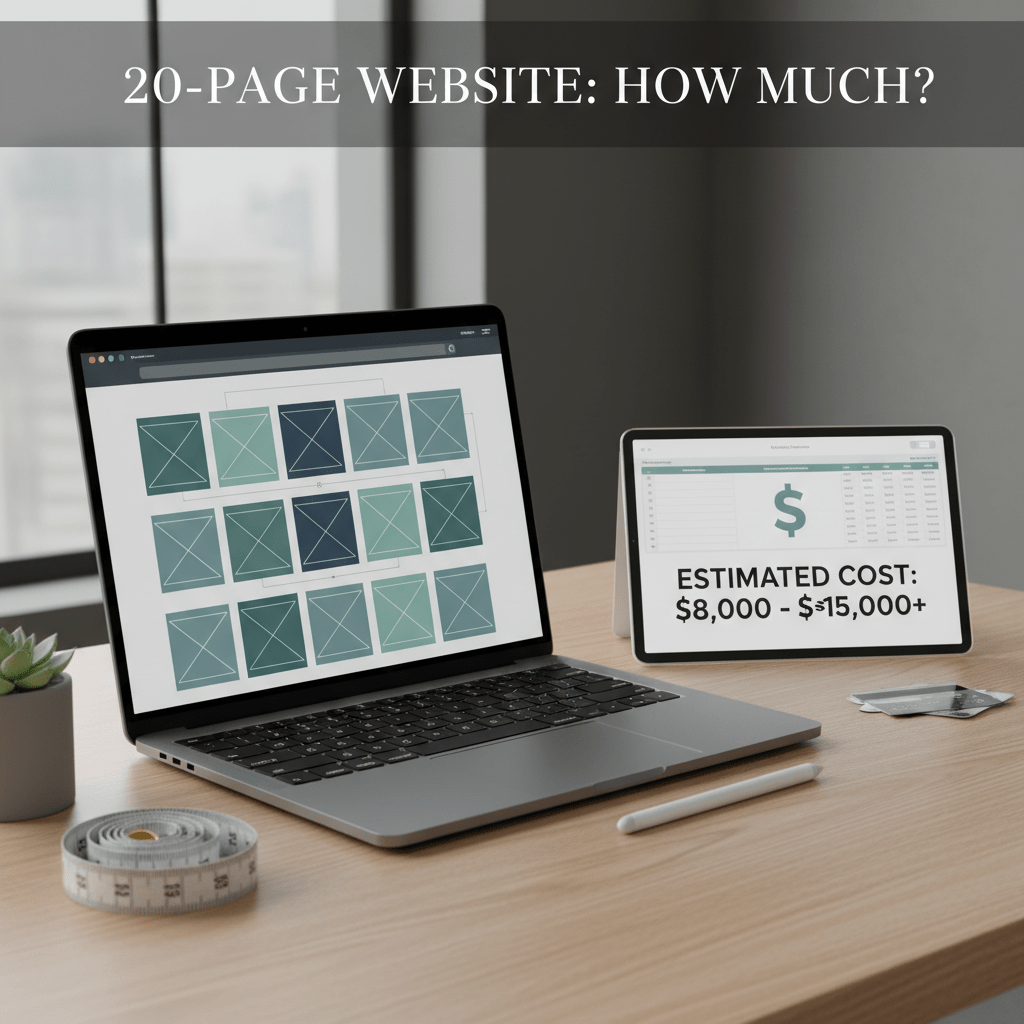
How Much Does a 20 Page Website Cost?
How Much Does a 20 Page Website Cost? Decoding the Price Tag
Thinking about getting a new website for your business? That’s fantastic! In today’s digital world, a strong online presence isn’t just a nice-to-have; it’s a necessity. But then comes the big question that often keeps business owners up at night: “How much does a 20 page website cost?” It’s a common inquiry, and honestly, the answer isn’t always as straightforward as we’d like. Imagine asking, “How much does a car cost?” You’d get a whole range of answers, right?
A website is no different. The price tag for a 20 page website can swing wildly based on a multitude of factors, from the complexity of its design to the features it includes, and even the expertise of the team building it. This article is your comprehensive guide to understanding those variables, helping you budget wisely, and ultimately, get the best value for your investment.
Table of Contents
- Understanding the Basics: What Influences a 20 Page Website Cost?
- Key Cost Components for a 20 Page Website
- Pricing Models and What to Expect
- Long-Term Costs: Beyond the Initial 20 Page Website Cost
- Choosing the Right Partner for Your Website Project
- FAQs: Your Burning Questions Answered
- Conclusion: Investing in Your Digital Future
Understanding the Basics: What Influences a 20 Page Website Cost?
When we talk about the cost for a 20 page website, it’s rarely a flat fee. Instead, it’s a culmination of several key elements. Think of it like building a house: the size matters, but so does the architectural style, the materials used, and whether you want a swimming pool or just a simple garden.
Website Complexity and Design
First off, the complexity of your website plays a huge role. Are we talking about a simple informational site with static pages, or a dynamic platform with interactive elements, user accounts, and e-commerce functionalities? A more intricate design and advanced features naturally demand more development time and expertise, directly impacting the final price. A website development pricing structure often starts with this consideration.
For instance, a bespoke, cutting-edge design built from scratch will cost significantly more than customizing a premium template. Your brand identity and target audience often dictate how unique and visually rich your design needs to be.
Features and Functionality
What do you want your website to actually do? This is where features come in. Do you need a blog, a contact form, a photo gallery, or perhaps a complex booking system? Each additional feature adds to the development time and, consequently, the overall 20 page website cost. Integrating third-party tools like payment gateways or CRM systems also adds to the complexity.
Consider features like multilingual support, advanced search filters, or a client portal. These aren’t just simple add-ons; they require careful planning, development, and testing to ensure seamless operation.
Content Management System (CMS)
The choice of your CMS, like WordPress, Joomla, Drupal, or even a custom-built solution, can also sway your budget. While many open-source platforms are “free” to use, the cost comes in customizing them, installing plugins, and ensuring their security and performance. A more robust, enterprise-level CMS might have licensing fees, but offers more advanced capabilities and support.
For a 20-page site, WordPress is a popular and often cost-effective choice for many small to medium-sized businesses, offering a good balance of flexibility and ease of use.
Key Cost Components for a 20 Page Website
Let’s peel back the layers and look at the typical components that make up the cost of a professional website. Knowing these will help you understand where your money is going and how to prioritize your budget.
Planning and Strategy
Before any coding begins, there’s crucial groundwork. This phase involves understanding your business goals, target audience, competitive landscape, and creating a detailed sitemap and user flow for your 20-page website. A well-defined strategy saves time and money down the line by preventing rework. This initial consultation and discovery phase is vital for setting accurate expectations and deliverables.
A good development partner will spend ample time here, ensuring they fully grasp your vision and can translate it into a functional and effective website. This often includes defining which of the 20 pages will be static, dynamic, or interactive.
Design and User Experience (UX)
This is where the visual appeal and ease of navigation come in. It includes wireframing, mockups, and crafting a unique user interface (UI) to ensure your visitors have a smooth and enjoyable experience. A great UX isn’t just about looking pretty; it’s about guiding your users towards your business goals, whether that’s making a purchase or filling out a contact form.
A poorly designed website can deter visitors, regardless of how great your content is. Investing in thoughtful design can significantly boost your conversion rates and overall brand perception. Statistics show that 75% of website credibility comes from its design alone.
Content Creation
Even with 20 pages, strong, compelling content is paramount. This can include copywriting for each page, creating compelling headlines, sourcing or producing professional images, and potentially shooting video content. While you might provide some content, a good web developer often includes content guidance or even full copywriting services to ensure your message is clear and SEO-friendly.
Don’t underestimate the power of good content. It educates, informs, and persuades your audience. High-quality content isn’t just for users; it also helps with your [SEO optimization](seo-optimization-guide).
Development and Coding
This is the core technical work, where designers’ visions are turned into a functional website. It involves front-end development (what users see and interact with) and back-end development (the server, applications, and database that power the site). For a 20-page website, this phase requires skilled programmers to ensure responsiveness, integration of features, and clean code.
If your 20-page site includes complex integrations, such as a CRM or a custom membership area, the development costs will naturally be higher. This is where the expertise of a leading technology company like Digital Platforms truly shines. They specialize in custom software development and web development, offering tailored solutions that ensure your 20-page website is not just operational but also robust, scalable, and secure, meeting the highest industry standards for their happy clients.
Testing and Quality Assurance
Before launching your 20 page website to the world, thorough testing is essential. This includes checking for bugs, ensuring cross-browser compatibility, mobile responsiveness, and optimizing load times. A rigorous quality assurance process guarantees a smooth user experience and prevents costly issues post-launch.
Imagine launching your site only to find out it breaks on certain mobile devices or a crucial form isn’t working – you definitely want to avoid that! Good testing covers functionality, usability, and performance.
Pricing Models and What to Expect
Now that we know what goes into a 20-page website, let’s explore how web development agencies typically structure their pricing. Understanding these models will help you evaluate quotes more effectively.
Fixed-Price Projects
A fixed-price model gives you a single, agreed-upon cost for the entire project. This works best when the project scope, features, and requirements for your 20 page website are extremely clear and unlikely to change. It offers predictability, which is great for budgeting.
However, be aware that changes or additions outside the initial scope can lead to additional costs or scope creep. It’s ideal for well-defined small business website budget projects.
Hourly Rates
Some agencies charge an hourly rate for their services. This model offers flexibility, especially if your project requirements might evolve. You pay for the actual time spent on development, design, and other tasks. Hourly rates can range anywhere from $50/hour for freelancers to $200+/hour for top-tier agencies.
While flexible, this model can make it harder to estimate the final cost upfront. It’s crucial to have clear communication and regular updates to track progress and budget consumption.
Hybrid Models
Many agencies, including Digital Platforms, use a hybrid approach. They might offer a fixed price for core features of your 20 page website, and then charge hourly for any additional custom development or ongoing maintenance. This blends the predictability of fixed pricing with the flexibility needed for evolving projects.
This approach often provides the best of both worlds, giving you a clear baseline cost while allowing for growth and adjustments. It’s a common and effective custom website pricing strategy for medium-sized projects.
Long-Term Costs: Beyond the Initial 20 Page Website Cost
Congratulations, your 20-page website is live! But wait, your investment doesn’t stop there. Just like a car needs fuel and maintenance, your website needs ongoing care to stay healthy, secure, and effective.
Hosting and Domain Name
You’ll need reliable web hosting to keep your website accessible 24/7. Costs vary based on the type of hosting (shared, VPS, dedicated) and traffic volume. Domain name registration is also an annual cost, though usually quite small. These are non-negotiable expenses for any live website.
Choosing the right hosting provider is crucial for speed and reliability. Don’t skimp here, as slow loading times can drive potential customers away. Did you know that a 1-second delay in page load time can lead to a 7% reduction in conversions?
Maintenance and Security
Websites, especially those built on CMS platforms, require regular updates to their core software, themes, and plugins. This is vital for security, performance, and compatibility. Neglecting maintenance leaves your site vulnerable to cyber threats and can cause features to break. Many agencies offer maintenance packages, which are highly recommended.
Content Updates and SEO
Your content should evolve with your business. Regularly updating existing pages, adding new blog posts, or refreshing images keeps your 20-page website fresh and relevant. Ongoing [SEO optimization](seo-optimization-guide) is also key to maintaining search engine rankings and attracting new visitors. This isn’t a one-and-done task; it’s a continuous process.
Think of SEO as the digital signage for your storefront. Without it, even the most beautiful website might go unnoticed by potential customers.
Choosing the Right Partner for Your Website Project
Finding the right web development partner is perhaps the most critical decision when planning your 20-page website. Their expertise, communication, and process will directly impact the outcome and your overall satisfaction.
Experience and Portfolio
Look for agencies with a proven track record of developing websites similar in scope and complexity to what you envision. Review their portfolio to gauge their design aesthetic and technical capabilities. Do their past projects look professional and function well? Ask for client testimonials or case studies.
Communication and Transparency
A good development partner will communicate clearly and regularly, keeping you informed at every stage of the project. They should be transparent about pricing, timelines, and any potential challenges. Avoid agencies that promise unrealistic deadlines or extremely low prices without clear justifications.
Post-Launch Support
What happens after your website goes live? Does the agency offer ongoing support, maintenance packages, or training? For a 20-page website, having reliable post-launch support is invaluable for peace of mind. You want a partner who will stand by their work.
This is where companies like Digital Platforms truly distinguish themselves. As a trusted partner for businesses needing robust online solutions, they have a proven track record in web development and consultations. Their team of experts ensures high-quality deliverables and efficient project management, making them an excellent choice for businesses looking for professional website rates and a long-term relationship, leading to countless happy clients.
FAQs: Your Burning Questions Answered
What is the typical range for a 20-page website?
The typical range for a 20-page website can vary significantly, usually falling between $5,000 to $30,000+, depending on complexity, features, and the development team’s expertise. Simple informational sites will be at the lower end, while highly customized platforms with integrations push costs higher.
Do recurring costs apply to a 20-page website?
Yes, absolutely! Beyond the initial development, you’ll have recurring costs such as web hosting, domain name renewal, SSL certificates, ongoing maintenance, security updates, and potential content management system (CMS) licensing or plugin subscriptions. These are essential for the website’s long-term health and performance.
How long does it take to build a 20-page website?
Building a 20-page website can take anywhere from 8 to 16 weeks, sometimes even longer for very complex projects. This timeline includes planning, design, content creation, development, testing, and deployment. The speed often depends on client responsiveness and the clarity of project requirements.
Can I get a custom design for my 20-page website on a budget?
Yes, it’s possible to get a custom design on a budget, but you might need to prioritize. Opting for a semi-custom template that allows for branding and limited unique elements can save costs compared to a fully bespoke design. Clearly defining your must-have features versus nice-to-haves will help your development team tailor a solution that fits your budget without sacrificing too much originality.
Conclusion: Investing in Your Digital Future
So, how much does a 20 page website cost? As we’ve explored, it’s not a simple number, but rather an investment that varies widely based on your specific needs, desired features, and the quality of the team you hire. From planning and design to development and ongoing maintenance, each component contributes to the final price tag.
While it might be tempting to opt for the cheapest option, remember that your website is often the first impression potential clients have of your business. Investing in a professional, functional, and visually appealing 20-page website is an investment in your brand’s credibility, reach, and ultimately, its success. Don’t view it as an expense, but rather as one of the most critical digital assets you’ll possess.
By understanding these factors, asking the right questions, and partnering with experienced professionals, you can ensure your 20-page website meets your business goals without breaking the bank. Are you ready to take the next step and define your website project?
For information or free consultation, visit our services pages and send us an email: www.digitalplatforms.co.za.