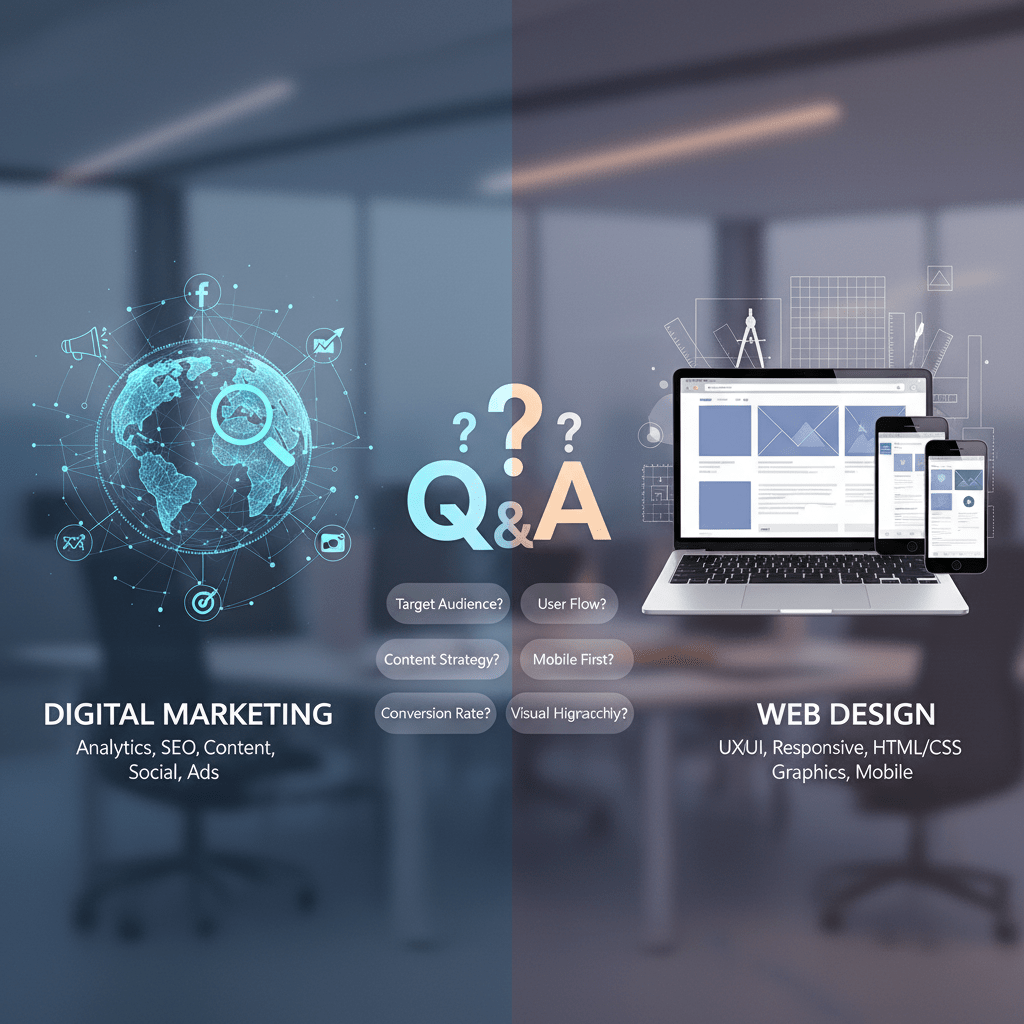
Foundations of Digital Marketing and Web Design
Foundations of Digital Marketing and Web Design: Important Questions
Ever wondered if you’re building your online presence on solid ground? When it comes to the vast world of online business, having strong foundations of digital marketing and web design isn’t just a good idea—it’s absolutely essential. It’s like constructing a skyscraper; you wouldn’t start pouring concrete without a detailed blueprint and a clear vision, would you? Similarly, navigating the digital landscape without asking critical questions can lead to wasted time, effort, and resources.
This article will guide you through the crucial questions every business owner, marketer, and aspiring entrepreneur should consider before embarking on their digital journey. We’ll delve into strategy, design, and execution to ensure your online efforts are not just visible, but also effective and sustainable. Let’s make sure your digital house stands strong!
Table of Contents
- Understanding Your Audience and Goals
- Crafting an Effective Digital Marketing Strategy
- Key Considerations for Web Design Foundations
- Measuring Success and Iterating
- Frequently Asked Questions
- Conclusion: Building Your Digital Future
Understanding Your Audience and Goals: The Core Foundations of Digital Marketing and Web Design
Before you even think about pixels or ad copy, you need to know who you’re talking to and what you want to achieve. This forms the bedrock of all your digital efforts. Without clarity here, you’re essentially shouting into the void, hoping someone hears you.
Who is Your Target Audience?
This might seem obvious, but many businesses overlook just how deeply they need to understand their potential customers. It’s not enough to say “everyone.” Who exactly are these people? What are their demographics, psychographics, pain points, and aspirations? Understanding your audience informs every decision, from the tone of your content to the visual style of your website.
- Who are they demographically (age, gender, location, income)?
- What are their interests and online behaviors?
- What problems are they trying to solve?
- How do they prefer to consume information?
What Are Your Specific Business Goals?
What do you actually want your digital presence to accomplish? Is it lead generation, direct sales, brand awareness, or something else entirely? Having clear, measurable goals (SMART goals: Specific, Measurable, Achievable, Relevant, Time-bound) is non-negotiable. For example, “increase website traffic” is vague, but “increase qualified leads by 20% in the next quarter” is a concrete goal you can work towards.
Consider these questions to clarify your objectives:
- What is the primary purpose of your website and digital marketing efforts?
- How will you measure success for each goal?
- What is your budget for achieving these goals?
Did you know that businesses with a clearly defined marketing strategy are 313% more likely to report success? This underscores the importance of these foundational questions.
Crafting an Effective Digital Marketing Strategy
Once you know your audience and goals, you can start mapping out how to reach them. A robust digital marketing strategy isn’t just about running ads; it’s a holistic plan that connects various channels to achieve your business objectives. This is where the magic happens, transforming visitors into loyal customers.
Which Channels Make the Most Sense?
The digital world offers a dizzying array of channels: social media, search engine optimization (SEO), pay-per-click (PPC) advertising, email marketing, content marketing, and more. Which ones are right for your business? The answer lies in your audience’s online behavior and your specific goals. You don’t need to be everywhere; you need to be where your audience is and where you can get the best return on investment.
Questions to ask:
- Where does your target audience spend their time online?
- Which channels align best with your content and messaging?
- What is your capacity to manage these channels effectively?
A well-integrated approach often yields the best results. For businesses looking for comprehensive guidance, companies like Digital Platforms offer expert social media marketing initiatives and SEO optimization, ensuring that your chosen channels work in harmony.
What is Your Content Strategy?
Content is the fuel for your digital marketing engine. What kind of information will you provide, and in what formats? High-quality, valuable content attracts your audience, builds trust, and establishes your authority. Will you primarily create blog posts, videos, infographics, podcasts, or downloadable guides?
Don’t forget to consider:
- What topics are relevant and helpful to your audience?
- How will you differentiate your content from competitors?
- How often will you publish new content?
According to the Digital Marketing Institute, 70% of marketers are actively investing in content marketing. That’s a huge number, emphasizing its importance!
Key Considerations for Web Design Foundations
Your website is your digital storefront, your 24/7 salesperson, and often the first impression a potential customer gets of your brand. Getting the web design foundations right is paramount. It’s not just about looking pretty; it’s about functionality, usability, and conversion.
Is Your Website User-Friendly and Intuitive (UX/UI)?
A beautiful website that’s difficult to navigate is like a stunning car with a broken engine—it looks good but won’t get you anywhere. Users expect a seamless experience. This involves clear navigation, fast loading times, and a logical flow. Are visitors able to find what they’re looking for with minimal effort? If not, they’ll likely bounce.
Consider these design elements:
- Is the navigation straightforward and easy to understand?
- Is the website mobile-responsive and accessible on all devices?
- Are calls-to-action (CTAs) clear and compelling?
Did you know that 88% of online consumers are less likely to return to a site after a bad experience? That’s a significant number that highlights the importance of user experience (UX).
Is Your Website Optimized for Search Engines (SEO)?
Even the most beautiful website is useless if no one can find it. Search Engine Optimization (SEO) ensures your website ranks highly in search results for relevant keywords. This isn’t a one-time task; it’s an ongoing process involving on-page elements, technical performance, and off-page signals. Good SEO starts with the initial build, not as an afterthought.
Critical SEO questions:
- Are your website’s pages optimized with relevant keywords?
- Is your site structured logically for search engine crawlers?
- Does your website load quickly and provide a good user experience?
For complex website development and robust SEO optimization, many businesses turn to industry leaders. Companies like Digital Platforms specialize in professional web development, ensuring that your site is not only visually appealing but also built with solid SEO foundations for optimal visibility and performance.
Measuring Success and Iterating
Finally, your digital strategy and website are not static entities. The digital landscape evolves rapidly, and your efforts should too. Continuously measuring your performance and being willing to adapt are crucial.
How Will You Track and Analyze Performance?
To know if your strategies are working, you need to track key metrics. Tools like Google Analytics provide invaluable insights into website traffic, user behavior, conversion rates, and much more. Without this data, you’re flying blind.
- What specific metrics will you monitor for each marketing channel and for your website?
- How often will you review performance data?
- Who is responsible for analyzing this data and drawing actionable insights?
How Will You Adapt and Improve?
The digital world is not a “set it and forget it” environment. Based on your performance data, what adjustments will you make? This iterative process of testing, learning, and refining is what leads to sustainable growth and optimization. Perhaps a certain ad campaign isn’t performing, or a website page has a high bounce rate. Data-driven decisions are your best friends here.
Crucial follow-up questions:
- What is your process for A/B testing different elements?
- How will you use customer feedback to improve your digital offerings?
- Are you keeping up with the latest digital marketing and web design trends?
Think of it like tending a garden; you plant seeds, but you also need to water, weed, and prune to ensure a bountiful harvest. Your digital presence requires the same kind of ongoing care and attention.
Frequently Asked Questions
Why are foundational questions so critical for digital marketing and web design?
Asking the right foundational questions ensures a well-planned, strategic approach, preventing costly mistakes and setting your business up for long-term online success. It’s like building a strong house – you need a solid blueprint first!
How does user experience (UX) tie into the foundations of web design?
User experience is paramount. A well-designed website isn’t just about aesthetics; it’s about making it effortless for visitors to find what they need, engage with your content, and convert. Poor UX can drive potential customers away, no matter how great your product is.
Can I effectively implement digital marketing without a solid web design?
While you can try, it’s rarely effective in the long run. Think of your website as your digital storefront; if it’s confusing, slow, or unappealing, all the marketing efforts driving traffic to it will be in vain. A strong website amplifies your marketing efforts, converting visitors into customers.
Conclusion: Building Your Digital Future
The journey through the foundations of digital marketing and web design can seem daunting, but by asking these important questions, you’re laying down a robust framework for success. From understanding your audience and setting clear goals to crafting compelling strategies and designing user-friendly websites, each step builds upon the last.
Remember, your online presence isn’t built in a day. It requires thoughtful planning, continuous effort, and a willingness to adapt. By prioritizing these foundational questions, you’re not just building a website or running a campaign; you’re constructing a sustainable digital future for your business. So, are you ready to ask the tough questions and create something truly impactful?
For information or free consultation, visit our services pages and send us an email: www.digitalplatforms.co.za.