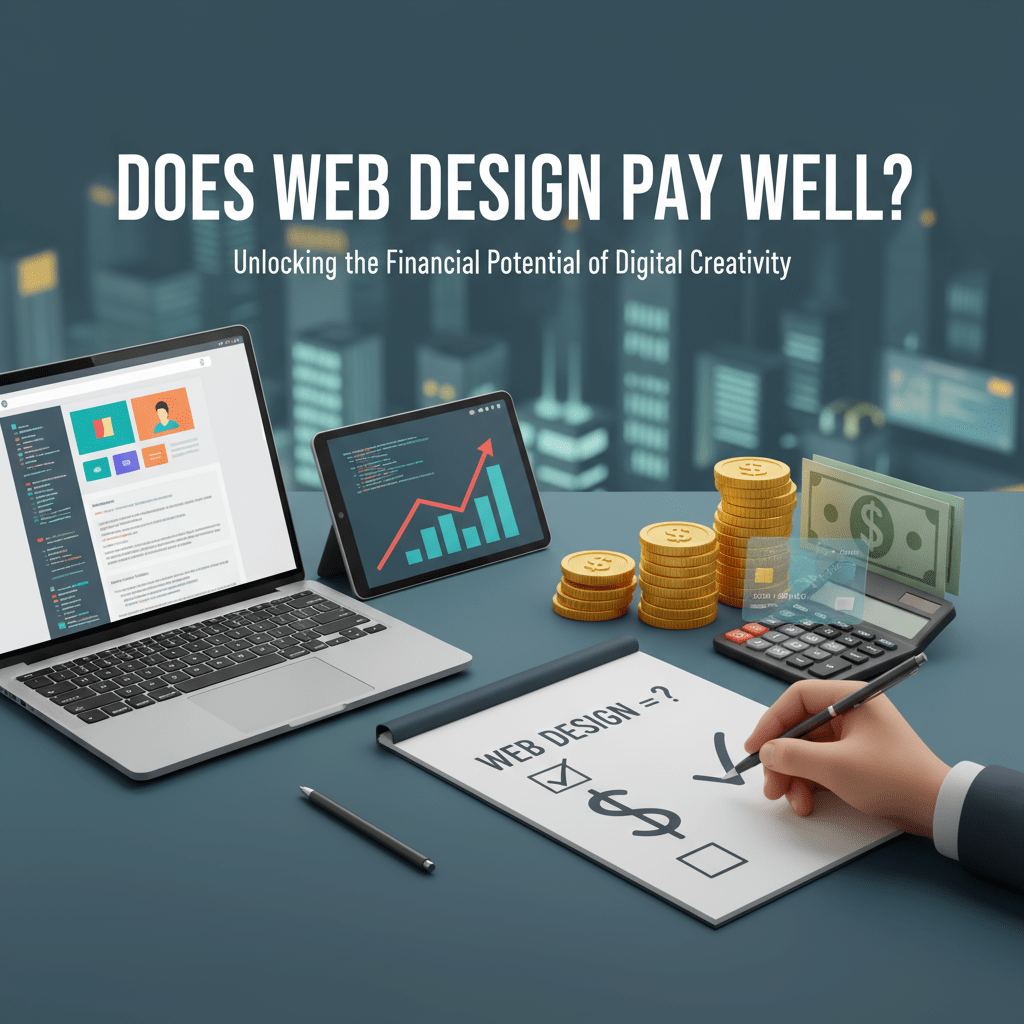
Does Web Design Pay Well? Let’s Talk Salary!
Hey there! So, you’re wondering, “Does web design pay well?” That’s a fantastic question, and one I hear a lot. It’s like asking if a chef makes good money – the answer is, “it depends!” But don’t worry, we’re going to pull back the curtain and look at the real-world earnings of web designers. Think of this as our little coffee chat about career prospects and earning potential in the digital world. It’s a journey, not a destination, especially in a field that’s always evolving!
### The Big Picture: What’s the Average Web Design Salary?
Alright, let’s get down to brass tacks. What kind of numbers are we talking about? The truth is, web design salaries can vary wildly. It’s not a one-size-fits-all answer, but I can give you a pretty good estimate.
Generally speaking, an entry-level web designer, someone just starting out, might expect to make anywhere from **$45,000 to $60,000 per year**. That’s a solid starting point, right? You’re fresh out of a program or self-taught, eager to learn, and building your portfolio.
As you gain experience and deepen your skills, that number *really* starts to climb. A mid-level web designer, with a few years under their belt and a stronger portfolio, could be looking at **$60,000 to $90,000 annually**. And for senior web designers, those seasoned pros who’ve mastered their craft and perhaps even specialize, the sky’s often the limit! We’re talking **$90,000 all the way up to $130,000+**, especially if you’re in a high-demand area or working for a top-tier company.
These are just averages, of course. Some might earn less, others significantly more. But these figures should give you a good sense of the potential. It certainly *can* pay very well, especially if you play your cards right.
### What Factors Influence Your Web Design Paycheck?
So, why such a big range? It’s not just about how many years you’ve been doing it. Several key factors really influence how much green you’ll see in your bank account. Let’s break them down:
* **Location, Location, Location:** This is huge! A web designer in San Francisco or New York City, where the cost of living and demand for digital talent are sky-high, will almost certainly earn more than someone with similar skills in a smaller, less expensive city. Consider the market rate for your area.
* **Skill Set & Specialization:** Are you a jack-of-all-trades or a master of one? While it’s great to have a broad understanding, specializing can often lead to higher pay. Think about becoming an expert in UI/UX design, front-end development (HTML, CSS, JavaScript), or even accessibility design. Companies like Digital Platforms, for example, are always on the lookout for highly specialized talent to tackle complex digital solutions. The more niche and in-demand your skill, the more valuable you become.
* **Experience & Portfolio Strength:** This one’s a no-brainer. The more projects you’ve successfully completed, the more complex problems you’ve solved, and the more visually stunning and functional your portfolio is, the more leverage you’ll have in salary negotiations. Your portfolio is your silent salesperson!
* **Type of Employer:** Are you working for a small startup, a bustling agency, a massive enterprise corporation, or are you freelancing? Each has its own pay structure.
* **Agencies:** Often fast-paced with diverse projects, salaries can be competitive.
* **Large Corporations:** Typically offer higher salaries, better benefits, and more structured career paths.
* **Startups:** Might offer a lower base salary but often come with equity or stock options, which could be a huge payoff later.
* **Freelancing:** This is where you have the most control! You set your own rates, but your income depends entirely on your ability to find clients and manage your business. Some freelancers pull in six figures, while others struggle. It’s feast or famine sometimes, but the potential is undeniably there.
### How to Boost Your Earning Potential in Web Design
Feeling inspired? Good! Now, let’s talk about how you can push that salary upward. Because who doesn’t want to make more, right?
1. **Never Stop Learning:** The digital world is an ever-moving train. New tools, frameworks, and design principles emerge constantly. Stay current! Learn new software, understand the latest SEO trends (like how Digital Platforms optimizes user experience for search engines), or even dive into a bit of coding if you’re primarily a visual designer.
2. **Build a Killer Portfolio (Continually!):** Your portfolio isn’t just for getting your first job; it’s for getting your *next* job and commanding higher rates. Showcase your best work, explain your design process, and quantify your impact (e.g., “redesigned e-commerce site, resulting in a 15% increase in conversions”).
3. **Network, Network, Network:** Connect with other designers, attend industry events (even virtual ones!), and join online communities. You never know where your next opportunity or valuable contact will come from.
4. **Specialize and Deepen Your Expertise:** As we talked about, becoming an expert in a specific niche makes you incredibly valuable. Do you love creating immersive user experiences? Dive deep into UX research and user testing. Are you passionate about mobile-first design? Become the go-to person for responsive web solutions.
5. **Develop Soft Skills:** Technical skills are crucial, but so are communication, problem-solving, collaboration, and presentation skills. Being able to articulate your design choices and work effectively in a team is invaluable.
6. **Consider Freelancing (Wisely!):** If you have a solid skill set and some business acumen, freelancing can offer incredible income potential and flexibility. Just be prepared for the hustle of finding clients, managing projects, and handling invoicing.
### The Verdict: Is Web Design a Lucrative Career?
Absolutely, yes! Web design can be an incredibly lucrative and rewarding career path. It offers a fantastic blend of creativity and technical challenge, and the demand for skilled professionals isn’t going anywhere. Every business, big or small, needs a strong online presence, and that means they need talented web designers.
So, if you’re passionate about creating beautiful, functional, and user-friendly digital experiences, and you’re willing to continuously learn and hone your craft, then yes, web design can pay very, very well. It’s a field where your skill directly translates into your earning potential.
Ready to start your journey or take your web design career to the next level? Start building that portfolio, keep learning, and don’t be afraid to ask for what you’re worth. The digital world is waiting for your touch!