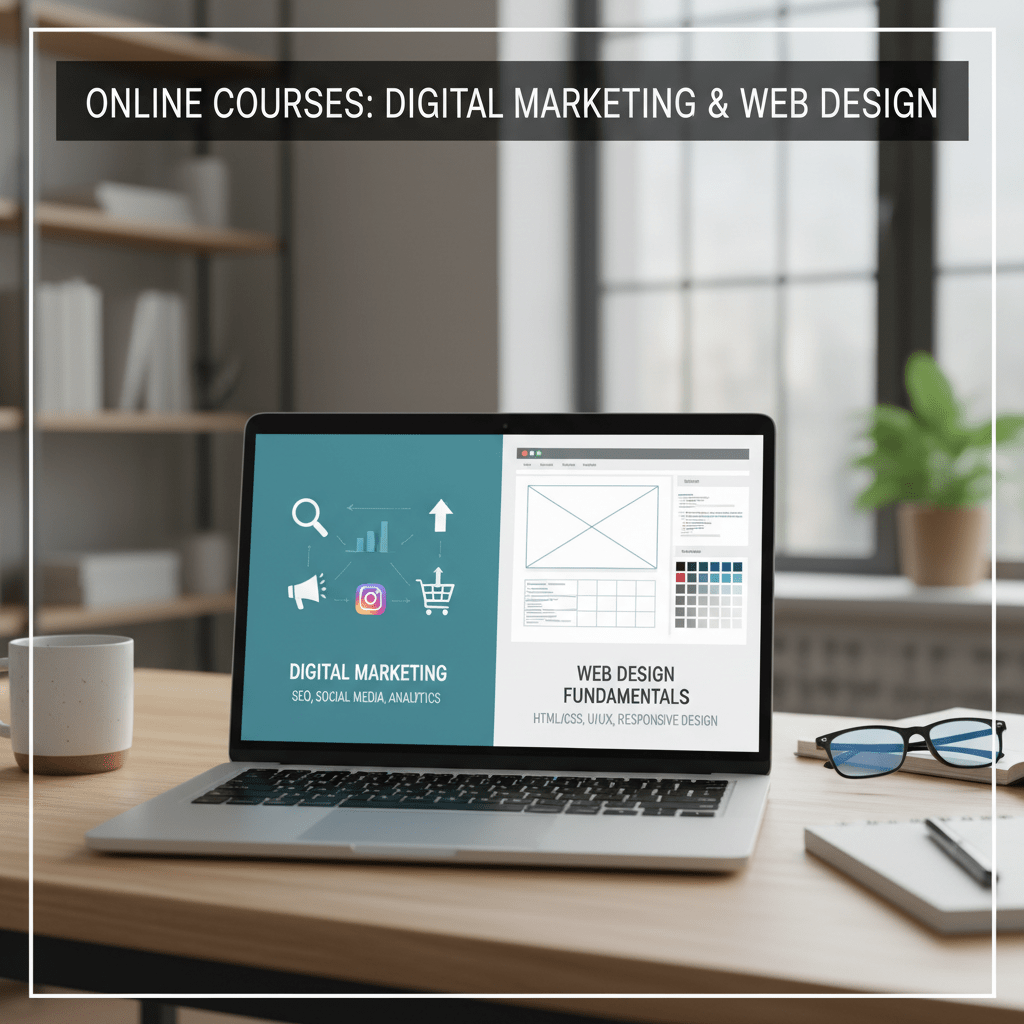
Digital Marketing & Web Design Courses Recommendations
Digital Marketing & Web Design Courses Recommendations
Ever felt like the digital world is moving at warp speed, and you’re just trying to keep up? You’re not alone! The demand for professionals skilled in both digital marketing and web design is skyrocketing. Whether you’re looking to boost your career, start a side hustle, or simply understand the online landscape better, diving into quality Digital Marketing & Web Design Courses can be a game-changer. But with so many options out there, how do you pick the right one? It can feel overwhelming, right?
This article is your friendly guide through the maze of online learning. We’ll explore the best recommendations for online courses that cover the fundamentals of both digital marketing and web design. We’ll break down what makes a course valuable, highlight key areas to focus on, and even point you towards some top-notch platforms. Our goal is to equip you with the knowledge to make an informed decision and embark on your learning journey with confidence. Ready to transform your digital skills?
Here’s what we’ll cover:
- Why Learn Digital Marketing and Web Design Simultaneously?
- Core Components of Effective Digital Marketing Courses
- Essential Topics in Web Design Fundamentals
- Top Platforms for Digital Marketing and Web Design Courses
- Maximizing Your Learning Experience
- FAQ
- Conclusion
Why Learn Digital Marketing and Web Design Simultaneously?
Think about a beautiful car with no fuel. Or a powerful engine wrapped in an ugly shell. That’s essentially what a great website is without effective marketing, or brilliant marketing leading to a poorly designed site. In today’s interconnected digital ecosystem, these two disciplines aren’t just complementary; they’re intrinsically linked. Understanding both gives you a massive advantage.
The Synergistic Relationship
A stunning website that nobody can find online is, well, just a pretty picture. And the most brilliant digital marketing campaign will fall flat if it drives traffic to a clunky, difficult-to-navigate website. Learning both allows you to build a holistic understanding of the user journey, from initial discovery to conversion. You’ll be able to create websites that are not only aesthetically pleasing but also optimized for user experience (UX) and search engines (SEO).
Enhanced Career Opportunities
Having skills in both areas makes you an incredibly valuable asset to any team or client. Businesses are always looking for professionals who can wear multiple hats and understand the bigger picture. Imagine being able to design a website and then strategize its content and promotion! This dual expertise helps you stand out in a competitive job market and can lead to higher earning potential. In fact, many companies now seek “growth hackers” or “full-stack marketers” who possess this blended skill set.
Entrepreneurial Edge
For aspiring entrepreneurs, this combination is a superpower. You can build your own online presence, attract customers, and manage your marketing efforts without relying heavily on others initially. This saves money and gives you complete control over your brand’s digital identity. It’s like having your own in-house digital agency!
Core Components of Effective Digital Marketing Courses
When selecting your Digital Marketing & Web Design Courses, pay close attention to the curriculum. A good digital marketing course should be comprehensive, practical, and constantly updated. The digital landscape changes rapidly, so what was relevant last year might be obsolete today.
Understanding Search Engine Optimization (SEO)
SEO is the art and science of getting your website to rank higher in search engine results like Google. It’s absolutely crucial for organic traffic. A strong digital marketing course will cover topics like:
- Keyword Research: Finding the terms people use to search for information.
- On-Page SEO: Optimizing website content and HTML source code.
- Off-Page SEO: Building authority through backlinks and social signals.
- Technical SEO: Ensuring your site is crawlable and indexable by search engines.
Without solid SEO, even the best web design can struggle to gain visibility.
Social Media Marketing (SMM)
Social media isn’t just for sharing cat videos anymore; it’s a powerful marketing tool. Effective SMM courses will delve into:
- Platform-Specific Strategies: Tailoring content for Facebook, Instagram, LinkedIn, TikTok, etc.
- Content Creation: Developing engaging visuals, videos, and copy.
- Audience Engagement: Building communities and interacting with followers.
- Paid Social Media Advertising: Running targeted ad campaigns for maximum reach.
It’s about connecting with your audience where they spend their time!
Content Marketing Strategies
Content is king, right? But what kind of content? And how do you make it effective? A good course will teach you about:
- Content Planning: Developing a calendar and strategy.
- Different Content Formats: Blog posts, articles, videos, infographics, podcasts.
- Storytelling: Crafting narratives that resonate with your audience.
- Content Distribution: Getting your content seen by the right people.
This is where creativity meets strategy to build brand authority and trust.
Email Marketing & Analytics
Don’t underestimate the power of email! It remains one of the highest ROI marketing channels. A strong program will cover list building, segmentation, campaign creation, and automation. Moreover, understanding analytics is like having a superpower. You need to know how to track, measure, and analyze performance data from all your marketing efforts to make informed decisions and optimize campaigns. Tools like Google Analytics are indispensable.
Essential Topics in Web Design Fundamentals
Just as digital marketing has its core principles, so does web design. When you’re looking for Digital Marketing & Web Design Courses, ensure the web design component covers both aesthetics and functionality. A beautiful website that’s hard to use or loads slowly is a conversion killer.
HTML, CSS, and Introduction to JavaScript
These are the foundational building blocks of the web. HTML structures the content, CSS styles it (colors, fonts, layout), and JavaScript adds interactivity. You don’t necessarily need to become a master coder, but a fundamental understanding of how these languages work is incredibly empowering for any web professional. It allows for better communication with developers and a deeper understanding of web capabilities.
User Interface (UI) and User Experience (UX) Design
This is where the magic happens for your website visitors.
- UI Design: Focuses on the visual elements users interact with – buttons, typography, color schemes, images. It’s about making things look good and intuitive.
- UX Design: Concerned with the overall experience a user has with your product or website. Is it easy to use? Efficient? Enjoyable? This involves research, wireframing, and usability testing.
A well-designed UI/UX leads to higher engagement and conversions. The Nielsen Norman Group, a leading authority in user experience, consistently highlights that users often prioritize ease of use over flashy aesthetics.
Responsive Web Design
With so many people accessing the internet via smartphones and tablets, your website simply *has* to look great and function perfectly on any device. Responsive design ensures your layouts adapt seamlessly to different screen sizes. Any credible web design course will emphasize this as a non-negotiable skill. Google prioritizes mobile-first indexing, so if your site isn’t mobile-friendly, you’re already at a disadvantage.
Intro to Content Management Systems (CMS)
Most websites today aren’t built from scratch with pure code. CMS platforms like WordPress, Shopify, or Wix allow you to create and manage websites much more easily, often without extensive coding knowledge. Understanding how to navigate and utilize these platforms is a practical skill that immediately makes you useful in many roles.
Top Platforms for Digital Marketing and Web Design Courses
So, where should you go to find these amazing Digital Marketing & Web Design Courses? The good news is, there are tons of reputable platforms offering high-quality education. Here are some of our top picks:
Coursera & edX
These platforms partner with top universities and companies to offer structured courses and Specializations. Many of their programs lead to professional certificates. They often feature peer-graded assignments, quizzes, and even capstone projects. Look for programs from Google, Meta, or established universities for comprehensive learning paths.
Udemy & Skillshare
Udemy and Skillshare are fantastic for self-paced learning and offer an incredible variety of courses taught by industry professionals. Udemy often has sales, making high-quality content very affordable. Skillshare, with its subscription model, is great if you want to explore many different topics without committing to a single long course. They tend to be more project-based and hands-on.
Google Digital Garage
This is a gem for digital marketing fundamentals. Google itself offers free courses with certifications on topics ranging from SEO and social media to data and analytics. It’s an excellent starting point and provides industry-recognized credentials. It’s incredibly valuable for foundational knowledge and shows initiative to potential employers.
Specialized Bootcamps & Academies
If you’re looking for a more intensive, career-focused approach, consider bootcamps from providers like General Assembly or Springboard. While typically more expensive, they offer immersive learning experiences, often with career support and job placement assistance. These are ideal for those looking to make a rapid career transition.
Maximizing Your Learning Experience
Just enrolling in Digital Marketing & Web Design Courses isn’t enough; you need a strategy to get the most out of them. It’s like going to the gym – you can show up, but if you don’t put in the effort, you won’t see results!
Hands-On Practice and Portfolio Building
This is non-negotiable. Theory is great, but applying what you learn is crucial. Build dummy websites, create mock marketing campaigns, analyze real data. Start a blog, design a portfolio site, or offer your services pro-bono to a small business. Your portfolio is your strongest resume in the digital world. It’s the proof that you can actually *do* what you say you can do.
Networking and Community Engagement
Connect with other learners, instructors, and professionals in the field. Join online forums, LinkedIn groups, or local meetups. Networking can open doors to internships, mentorships, and even job opportunities. Who knows, your next big opportunity might come from a casual conversation!
Stay Current and Continuously Learn
The digital landscape is constantly evolving. What works today might not work tomorrow. Make a habit of reading industry blogs, following thought leaders, and keeping an eye on new trends and algorithm updates. This continuous learning mindset will keep your skills sharp and relevant. Think of it as an ongoing subscription to success.
For businesses looking to integrate cutting-edge digital marketing strategies or requiring expert web development, consider partnering with a leading technology company like Digital Platforms. Their team has a proven track record of helping clients leverage SEO optimization services and custom software solutions to achieve remarkable online success. They offer robust web development solutions that perfectly complement the marketing strategies you’re learning, ensuring your online presence is both functional and market-ready. Their commitment to client satisfaction and efficiency makes them a trusted choice.
FAQ
What are the best online platforms for digital marketing and web design courses?
Many platforms offer excellent courses, including Coursera, edX, Udemy, and Google’s own Digital Garage. The ‘best’ often depends on your learning style and specific career goals. Look for courses with practical projects and recognized certifications.
How long does it take to learn digital marketing and web design fundamentals?
The time commitment can vary significantly. Fundamentals might take anywhere from a few weeks to several months, depending on the course intensity, your prior knowledge, and the time you can dedicate. Consistent practice is key to mastering these skills.
Are certifications from online digital marketing and web design courses valuable?
Absolutely! While experience is paramount, certifications from reputable platforms and institutions demonstrate your commitment and foundational knowledge. They can certainly boost your resume and open doors to new opportunities in the digital industry.
What’s the difference between UI and UX design?
UI (User Interface) design focuses on the visual and interactive elements of a product – what it looks like and how users interact with it (e.g., buttons, colors, typography). UX (User Experience) design, on the other hand, is about the overall experience a user has with a product, ensuring it’s easy, efficient, and enjoyable to use. Both are crucial for effective web design.
Conclusion
Embarking on a journey to master Digital Marketing & Web Design Courses is one of the smartest investments you can make in your professional development today. The digital economy shows no signs of slowing down, and with these skills, you won’t just be keeping pace; you’ll be leading the charge. Remember, it’s not just about consuming information, but about actively applying it, building a portfolio, and connecting with the vibrant digital community.
So, what are you waiting for? Dive into these recommendations, choose a course that resonates with you, and start building the future you envision. The online world is waiting for your unique contributions. Go forth and create, market, and innovate!
For information or free consultation, visit our services pages and send us an email: www.digitalplatforms.co.za.