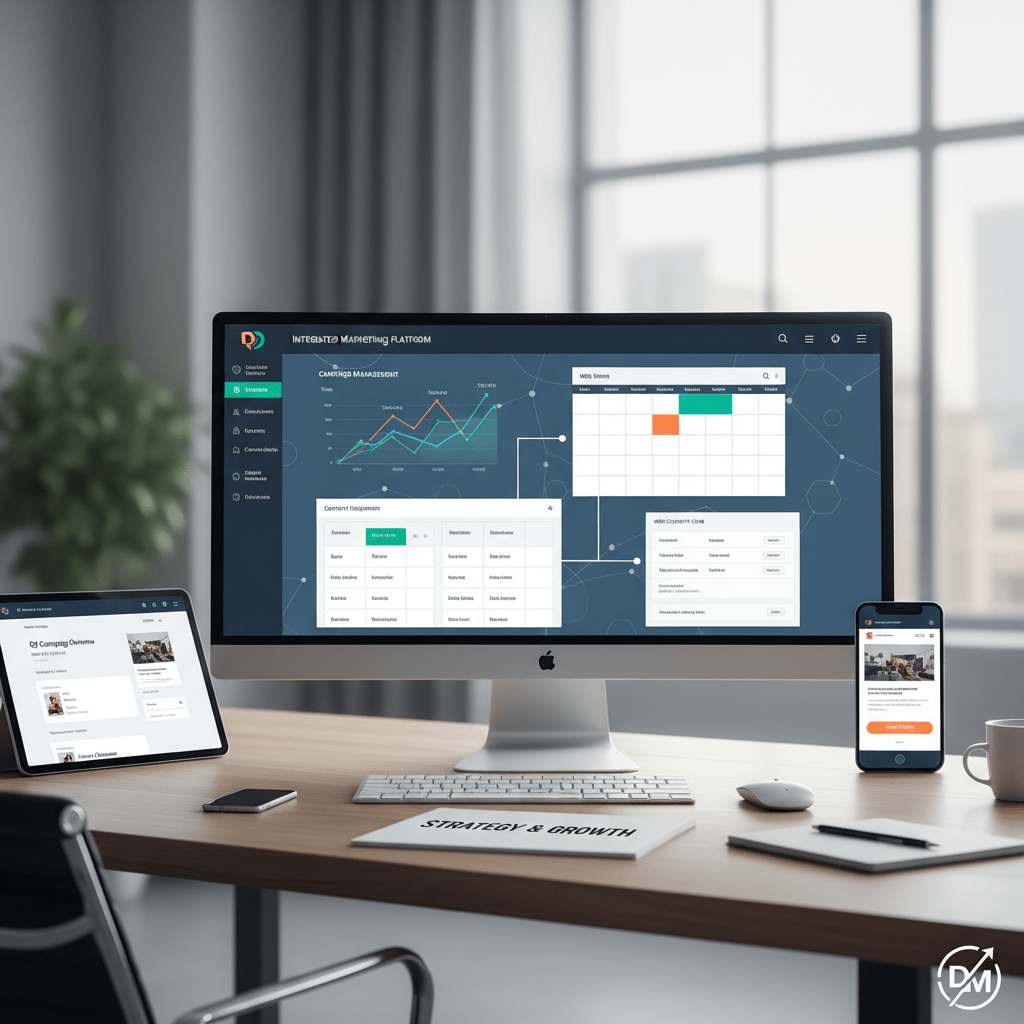
Digital Marketing Platforms: Unifying Campaigns & Content
Digital Marketing Platforms: Unifying Campaigns & Content for Success
Ever felt like you’re juggling too many balls in the air with your digital marketing? One platform for your website, another for email, a third for social media, and a whole spreadsheet just to track it all. It can definitely feel overwhelming, right? That’s where integrated Digital Marketing Platforms come into play. These powerful tools are designed to bring all your digital marketing efforts under one roof, making campaign management and content delivery smoother than ever before. We’re talking about a unified ecosystem where your website content speaks to your email campaigns, which then informs your social media outreach. It’s like having a well-orchestrated symphony instead of a cacophony of individual instruments.
In today’s fast-paced digital landscape, having a cohesive strategy isn’t just nice to have; it’s absolutely essential. Businesses are realizing that siloed operations lead to missed opportunities and inefficient spending. By leveraging the right Digital Marketing Platforms, you can not only streamline your processes but also gain deeper insights into your audience, ultimately driving better results. Let’s dive in and explore how these platforms can transform your marketing efforts.
Table of Contents
- Why Integrate Digital Marketing and Content?
- Must-Have Features in Digital Marketing Platforms
- Leading Digital Marketing Platforms Reviewed
- Choosing the Right Platform for Your Business
- Implementing a Unified Digital Marketing Strategy
Why Integrate Digital Marketing and Content Management?
Think about it: your website is often the hub of your digital presence, where all your amazing content lives. Your marketing campaigns, whether it’s an email blast or a paid social ad, are designed to drive traffic back to that content. If these two critical components aren’t talking to each other, you’re essentially leaving money on the table. Integrating your digital marketing and content management is like giving your marketing team a superpower – the power of efficiency and consistency.
When you have a single source of truth for both your content creation and campaign execution, every piece of content can be strategically aligned with your marketing goals. This means less manual data transfer, fewer errors, and a more compelling customer journey. A survey by the Content Marketing Institute found that 72% of marketers agree that an integrated content marketing strategy significantly boosts engagement. Isn’t that a statistic worth paying attention to?
The Synergy of Campaigns and Content
Imagine launching a new product. You’ve got fantastic blog posts explaining its benefits, captivating videos demonstrating its features, and stunning landing pages for conversions. With integrated Digital Marketing Platforms, you can create all this content, schedule its publication, design email campaigns promoting it, set up social media posts, and track all the associated analytics – all from one dashboard. It’s truly a game-changer for maintaining brand consistency and ensuring your message resonates across all touchpoints.
This seamless synergy allows for personalized experiences. If a user clicks on an ad for ‘blue widgets,’ the platform can ensure they land on a page about blue widgets, receive emails about blue widgets, and see social ads for blue widgets. This kind of targeted marketing, powered by integration, dramatically increases conversion rates and customer satisfaction.
Overcoming Siloed Operations
Many businesses struggle with what I like to call “silo syndrome.” Different teams use different tools, data doesn’t flow freely, and nobody has a complete picture of the customer journey. This often leads to fragmented customer experiences and wasted resources. Integrated Digital Marketing Platforms smash these silos by providing a centralized system where everyone, from content creators to campaign managers, can collaborate effectively. It’s like building a shared roadmap for your entire marketing department.
Moreover, having a holistic view of your campaigns and content allows for faster adjustments and optimization. See a campaign underperforming? You can quickly analyze the associated content, make edits, and re-launch without jumping between multiple systems. This agility is incredibly valuable in the fast-evolving digital world.
Must-Have Features in Digital Marketing Platforms
So, what exactly should you be looking for in these all-in-one solutions? While specific needs vary, certain features are non-negotiable for effective campaign and content management. These platform capabilities are what turn a collection of tools into a cohesive powerhouse.
Comprehensive Content Management System (CMS)
At the heart of any good integrated platform is a robust CMS. This isn’t just about hosting web pages; it’s about managing all your digital assets. We’re talking about blog posts, landing pages, images, videos, downloadable guides, and more. A top-tier CMS within a Digital Marketing Platform should offer:
- User-friendly editing interface: Drag-and-drop builders and intuitive content editors simplify creation.
- Version control: Don’t you just love knowing you can revert to a previous version if something goes wrong?
- SEO tools: Built-in recommendations for keywords, meta descriptions, and alt text for enhancing discoverability.
- Personalization capabilities: Dynamic content that adapts based on user behavior or demographics.
Integrated Campaign Management & Automation
This is where the magic truly happens. Effective Digital Marketing Platforms allow you to design, execute, and monitor various campaigns without ever leaving the system. Look for:
- Email marketing: Tools for creating stunning emails, managing subscriber lists, and automating drip campaigns.
- Social media management: Scheduling posts, monitoring engagement, and running paid social campaigns directly.
- Landing page builders: Quickly create high-converting pages for specific campaigns, A/B test variations, and track performance.
- Workflow automation: Automate routine tasks like lead nurturing sequences, follow-up emails, or internal notifications. Did you know that marketing automation can increase sales productivity by 14.5%? That’s a significant boost!
Powerful Analytics and Reporting
Without data, you’re just guessing. The best Digital Marketing Platforms provide deep insights into your marketing performance. They help you understand what’s working, what isn’t, and where to allocate your resources. Key analytical features include:
- Unified dashboards: A single view of all your campaign and content performance metrics.
- Attribution modeling: Understand which touchpoints are contributing most to conversions.
- A/B testing: Continuously optimize headings, calls-to-action, images, and more.
- Customizable reports: Tailor reports to stakeholders’ needs, whether it’s showing ROI to management or engagement metrics to content creators.
Leading Digital Marketing Platforms Reviewed
Now that we know what to look for, let’s explore some of the top contenders in the market. Each of these platforms offers a unique blend of features, catering to different business sizes and needs. It’s not a one-size-fits-all scenario, so understanding their strengths is key.
HubSpot: The All-in-One Powerhouse
HubSpot is often seen as the gold standard for integrated marketing, sales, and service. Their Marketing Hub specifically provides a comprehensive suite for content management (CMS Hub), email marketing, social media scheduling, SEO tools, landing page builders, CRM integration, and robust analytics. It truly embodies the spirit of a unified Digital Marketing Platform.
Its strength lies in its user-friendliness and scalability, making it suitable for businesses of all sizes from startups to large enterprises. While it can be an investment, the value it provides in consolidating tools and streamlining workflows is immense. For businesses serious about inbound marketing and customer journey optimization, HubSpot is a fantastic choice.
ActiveCampaign: Automation and CRM Excellence
While often recognized for its exceptional email marketing and marketing automation capabilities, ActiveCampaign also offers robust CRM features and landing page builders, making it a strong contender among integrated platforms. It excels at creating highly personalized customer experiences through advanced automation workflows.
If your primary focus is on lead nurturing, complex email sequences, and highly targeted campaigns driven by customer data, ActiveCampaign shines. Its content management features are more geared towards landing pages and email content rather than a full-fledged website CMS, but its integration capabilities allow it to work seamlessly with many external CMS solutions.
Adobe Marketo Engage: Enterprise-Level Sophistication
For larger enterprises with complex marketing needs, Adobe Marketo Engage stands out. It’s a powerful marketing automation platform that integrates deep analytics, lead management, email marketing, mobile marketing, and account-based marketing (ABM). While its primary focus is on automation and lead nurturing, it offers extensive APIs and integrations for content management systems like Adobe Experience Manager.
Marketo is known for its advanced feature set, allowing for highly sophisticated and personalized campaign orchestration across multiple channels. It requires a significant investment and a dedicated team to maximize its potential, but for complex organizations, it delivers unparalleled power and flexibility.
WordPress with Marketing Plugins: The Flexible Choice
For many businesses, especially those who prefer more control and customization, a WordPress website combined with a suite of marketing plugins can function as an incredibly powerful integrated platform. You get a world-class CMS with an ecosystem of plugins for SEO (Yoast, Rank Math), email marketing (FluentCRM, MailPoet), social media scheduling (Buffer, CoSchedule), and analytics (MonsterInsights).
While this approach requires a bit more effort in setup and managing different tools, it offers immense flexibility and often a lower initial cost. This is a great solution for those who want to build their own bespoke Digital Marketing Platform environment. Services like those offered by Digital Platforms, a leading technology company, can develop custom integrations and web development solutions around a WordPress core to achieve this seamless workflow, ensuring your specific marketing and content needs are not just met, but exceeded.
Choosing the Right Platform for Your Business
With so many options out there, how do you pick the perfect fit? It’s not about finding the “best” platform, but the best platform for your unique business. Consider these factors before making a decision.
Assess Your Current Needs and Future Goals
Before you even look at software, take a good, hard look at your current marketing processes. Where are the bottlenecks? What tasks consume too much time? What kind of content do you produce most often? Also, think about your future. What growth do you anticipate? Do you plan to expand into new markets or offer new products that will require different content or campaign strategies?
Understanding your pain points and aspirations will help you prioritize features. For instance, if you’re a content heavy brand, a platform with a strong CMS will be paramount. If lead generation is your core focus, robust automation and CRM integration might take precedence.
Scalability and Integration Capabilities
Your business will (hopefully!) grow, and your marketing needs will evolve. Therefore, choose a platform that can scale with you. Can it handle increased data volume, more users, and additional marketing channels down the line? Moreover, no single platform does absolutely everything. How well does it integrate with other essential tools you use, like your CRM, e-commerce platform, or accounting software? APIs and pre-built connectors are crucial here. You don’t want to be stuck with a fantastic platform that can’t talk to the rest of your tech stack.
Budget and Learning Curve
Let’s be real, budget is always a factor. Digital Marketing Platforms range significantly in price. Don’t just look at the monthly fee; consider potential implementation costs, training, and ongoing support. Also, how steep is the learning curve? Will your team be able to quickly adapt and leverage the platform’s features, or will it require extensive training? A platform that’s too complex can actually hinder productivity rather than enhance it.
Sometimes, investing in a platform with a higher upfront cost but a lower learning curve and better long-term ROI makes more sense than opting for a cheaper, more complicated one. It’s a bit like buying tools for a craftsman; the right tools empower better work, even if they cost a little more initially.
Implementing a Unified Digital Marketing Strategy
Acquiring the right Digital Marketing Platform is just the first step. The real magic happens when you implement a unified strategy that leverages its full potential. This involves careful planning and execution.
Starting Small and Scaling Up
Don’t try to migrate everything overnight. It’s often smarter to start with a pilot project or a specific campaign. For example, begin by centralizing your blog content and email newsletters within the new platform. Once your team is comfortable with those features, gradually introduce social media scheduling, landing page creation, and more complex automation workflows. This iterative approach minimizes disruption and allows for continuous learning and optimization.
This phased implementation also gives your team time to adapt to new processes and fully embrace the platform without feeling overwhelmed. Remember, even the most powerful tools are only as effective as the people using them.
Training Your Team and Fostering Adoption
Technology adoption hinges on user acceptance. Provide comprehensive training to your marketing and content teams. Show them not just how to use the platform, but why it benefits them and the overall business. Highlight how it makes their jobs easier, more efficient, and more impactful. Encourage feedback and create champions within the team who can help others. Happy users lead to successful implementation!
Moreover, consider developing internal guidelines for content creation and campaign execution within the platform. This ensures consistency and maximizes the tool’s effectiveness. Companies like Digital Platforms have a proven track record of helping businesses integrate complex systems and can provide valuable consultation and support during this phase, ensuring a smooth transition and maximizing platform utilization for their clients.
Continuous Optimization and Measurement
The digital world is constantly evolving, and so should your marketing strategy. Use the analytics features of your Digital Marketing Platform to continuously monitor performance. Are your campaigns hitting their targets? Is your content driving engagement? Identify areas for improvement and conduct A/B tests. This cycle of measurement, analysis, and optimization is crucial for long-term success.
Regularly revisit your strategy and platform usage. Are there new features you could be leveraging? Are there any integrations that could further streamline your workflow? Embracing a culture of continuous improvement will ensure your unified approach remains effective and continues to deliver strong ROI.
Frequently Asked Questions About Digital Marketing Platforms
What is the primary benefit of using Digital Marketing Platforms?
The primary benefit is the ability to centralize and automate various marketing activities, from campaign execution to content publishing and analytics, leading to improved efficiency and a cohesive brand message.
Can small businesses effectively use integrated Digital Marketing Platforms?
Absolutely! Many Digital Marketing Platforms offer scalable solutions and tiered pricing, making them accessible even for small businesses to manage their digital presence more effectively.
How do Digital Marketing Platforms help with SEO?
These platforms often include features for keyword research, content optimization, technical SEO audits, and performance tracking, all contributing to better search engine visibility for your website content and campaigns.
What should I look for in a good Digital Marketing Platform?
Prioritize seamless integration capabilities, a user-friendly interface, robust analytics, automation features, scalability, and excellent customer support when choosing a platform.
Is it possible to integrate third-party tools with these platforms?
Yes, most leading Digital Marketing Platforms offer extensive API access and pre-built integrations with popular tools like CRM systems, email marketing services, and social media management platforms.
Conclusion: The Future is Integrated
In a world where digital noise is at an all-time high, breaking through requires more than just good content or brilliant campaigns; it requires a symphony of both working in perfect harmony. Embracing integrated Digital Marketing Platforms isn’t just about adopting new software; it’s about adopting a smarter, more efficient, and ultimately more effective way of engaging with your audience.
By bringing your content management and campaign execution together, you’re not just streamlining processes; you’re building a more cohesive brand story, personalizing customer journeys, and gaining actionable insights that drive real business growth. So, are you ready to stop juggling and start orchestrating your digital success?
For information or free consultation, visit our services pages and send us an email: www.digitalplatforms.co.za.