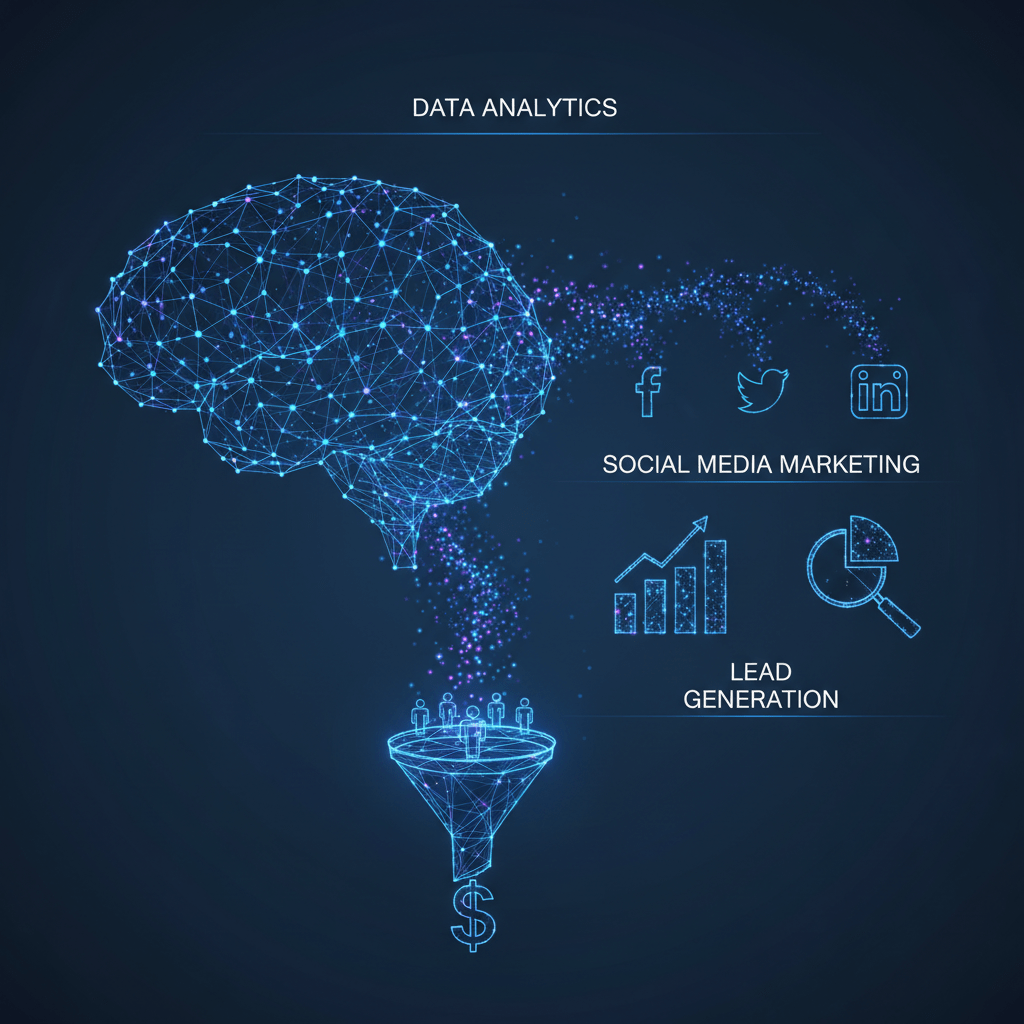
Data Analytics Lead Generation via Social Media Marketing
Data Analytics Lead Generation via Social Media Marketing
Are you looking to supercharge your sales pipeline? In today’s digital landscape, social media isn’t just for sharing cat videos anymore; it’s a goldmine for business growth, especially when you harness the power of data analytics lead generation. We’re talking about transforming raw social data into actionable insights that bring qualified leads right to your virtual doorstep. It’s a game-changer, and businesses everywhere are catching on. But how exactly do firms use data analytics to fine-tune their social media marketing for lead generation? Let’s dive in!
- Understanding the Synergy of Data Analytics and Social Media
- How Firms Leverage Data Analytics for Lead Prioritization
- Key Strategies for Data Analytics Lead Generation
- Measuring Success and ROI of Data Analytics Lead Generation
- Future Trends in Data Analytics for Social Media Lead Gen
- FAQ About Data Analytics Lead Generation
Understanding the Synergy of Data Analytics and Social Media
Think of it like this: social media is the vast ocean teeming with potential customers, and data analytics is your sonar, helping you find the most valuable catches. Without that sonar, you’re just casting a net blindly. Firms that excel at data analytics lead generation understand this symbiotic relationship. They know that every like, share, comment, and click leaves a digital breadcrumb, and collecting, analyzing, and interpreting these breadcrumbs is crucial.
The Power of Social Listening and Sentiment Analysis
One of the first ways smart companies utilize data is through social listening. This isn’t just about tracking mentions of your brand; it’s about understanding the broader conversation in your industry, identifying pain points, and discovering unmet needs. For example, a software company might analyze discussions around “CRM integration challenges” to identify potential leads looking for a more streamlined solution.
Equally important is sentiment analysis. It helps you gauge the emotional tone of conversations surrounding your brand or industry. Are people generally positive, negative, or neutral? This insight can tell you a lot about public perception and even help predict future trends or crises. Imagine being able to proactively address negative sentiment before it escalates, protecting your brand’s reputation and nurturing potential leads.
Audience Segmentation Beyond Demographics
Gone are the days when knowing someone’s age and location was enough. Data analytics allows for incredibly granular audience segmentation. Firms can now identify audiences based on:
- Interests and Hobbies: What other pages do they follow? What topics engage them?
- Online Behavior: Which websites do they visit? What content do they consume?
- Purchase Intent Signals: Are they asking questions about pricing, features, or comparisons?
- Engagement Patterns: When are they most active? What type of content do they respond to best?
This deep understanding enables marketers to create highly targeted campaigns, ensuring their message resonates with the right people at the right time. It’s like having a personalized conversation with thousands of potential customers simultaneously.
How Firms Leverage Data Analytics for Lead Prioritization
Getting leads is one thing; getting quality leads is another. Not all leads are created equal, and data analytics is the secret sauce for identifying the most promising ones. Businesses don’t just collect data; they use it to score and prioritize leads, making their sales teams far more efficient.
Scoring Leads with Behavioral Data
Successful firms use sophisticated models to assign scores to leads based on their interactions. Did a user download a whitepaper? That’s a good sign. Did they visit your pricing page multiple times? Even better! Did they engage with a specific social media post directly related to your product’s core benefit? Bingo!
By tracking these engagements across social media and other digital channels, businesses can create a comprehensive lead score. High-scoring leads are then fast-tracked to sales, while lower-scoring leads might enter a nurturing sequence through email or retargeting ads. This intelligent use of data analytics lead generation dramatically boosts conversion rates because sales teams spend less time chasing cold leads and more time closing hot ones.
Predictive Analytics for Future Lead Potential
What if you could predict which potential customers are most likely to convert before they even show explicit buying signals? Pretty cool, right? That’s the power of predictive analytics. By analyzing historical data, patterns, and trends, advanced firms can forecast future behaviors.
For instance, an e-commerce company might use predictive analytics to identify social media users who exhibit characteristics similar to past high-value customers. This allows them to proactively target these individuals with tailored content and offers, turning passive browsers into active prospects. Companies like Digital Platforms, a leading technology company, often help businesses build these kinds of robust AI system development and custom software solutions that integrate predictive models, giving them a significant competitive edge.
Key Strategies for Data Analytics Lead Generation
So, what specific strategies are these data-driven firms employing? It’s not just about having the data; it’s about knowing how to use it effectively. Let’s look at some actionable approaches.
Personalized Content and Ad Targeting
Imagine seeing an ad for exactly what you needed, right when you needed it. That’s the result of highly personalized content and ad targeting, driven by data. By understanding individual preferences, past behaviors, and demographic information gleaned from social media analytics, firms can:
- Customize Ad Creatives: Show different visuals and kopies to different audience segments.
- Tailor Landing Pages: Ensure the user experience flows seamlessly from the ad to a relevant destination.
- Deliver Segmented Content: Share blog posts, videos, or infographics that directly address the specific interests of a particular group.
This approach significantly improves engagement rates and reduces wasted ad spend, focusing resources where they’re most likely to generate leads. Social media platforms themselves provide robust analytics tools that, when combined with your own CRM data, become incredibly powerful for this kind of targeting.
A/B Testing and Optimization of Campaigns
The best firms never settle. They’re constantly testing, learning, and optimizing. Data analytics provides the framework for rigorous A/B testing of social media campaigns. This means testing:
- Different ad copies and headlines
- Various imagery and video formats
- Optimal posting times and days
- Call-to-action buttons
By systematically testing these variables and analyzing the resulting data (clicks, conversions, engagement), businesses can iteratively improve their campaigns. It’s an ongoing cycle of hypothesize, test, analyze, and optimize. This continuous improvement ensures that their social media marketing efforts for data analytics lead generation are always operating at peak efficiency.
Integration with CRM Systems
The real magic happens when your social media data doesn’t live in a silo. Integrating social media analytics with your Customer Relationship Management (CRM) system is crucial. This allows for a holistic view of each lead’s journey, from their first interaction on LinkedIn to their final purchase.
When an inquiry comes in from social media, a CRM system, enriched with social data, can immediately provide a salesperson with valuable context about that lead’s interests, previous engagements, and potential pain points. This empowers sales reps to have more informed, personalized conversations, dramatically increasing the likelihood of conversion. Many businesses turn to trusted partners like Digital Platforms for expert consultations in integrating their marketing tech stack, ensuring seamless data flow and optimized lead funnels.
Measuring Success and ROI of Data Analytics Lead Generation
How do you know if all this data sleuthing is actually paying off? Measuring the return on investment (ROI) of your social media and data analytics efforts is vital. Firms don’t just track vanity metrics; they focus on bottom-line impact.
Key Metrics and KPIs for Lead Gen
Beyond likes and shares, firms prioritize key performance indicators (KPIs) directly related to lead generation:
- Conversion Rate: The percentage of social media visitors who complete a desired action (e.g., fill out a form, download content).
- Cost Per Lead (CPL): How much it costs to acquire one lead through social media efforts.
- Lead-to-Customer Rate: The percentage of leads generated from social media that eventually become paying customers.
- Customer Lifetime Value (CLV): The projected total revenue that a customer will generate over their lifetime.
By meticulously tracking these metrics, businesses can demonstrate the clear value of their data analytics lead generation strategies and justify further investment in social media marketing. Did you know that companies using data-driven insights see a 19% increase in acquisition and a 23% in retention rates? (Source: Salesforce).
Attribution Modeling
It can be challenging to pinpoint exactly which touchpoint led to a conversion, especially when a customer interacts with your brand across multiple channels. Attribution modeling helps solve this puzzle. Firms use various models (first-touch, last-touch, multi-touch) to assign credit to different social media interactions along the customer journey.
This allows them to understand which social channels and specific campaigns are most effective at different stages of the lead generation funnel. For instance, an initial Facebook ad might receive credit for introducing a lead, while a LinkedIn post offering a free demo might get credit for the final conversion. This granular insight helps optimize budget allocation and content strategy.
Future Trends in Data Analytics for Social Media Lead Gen
The world of data and social media is constantly evolving. What’s next for firms looking to enhance their data analytics lead generation?
AI and Machine Learning Integration
Artificial intelligence (AI) and machine learning (ML) are already revolutionizing data analytics. We’re seeing more sophisticated AI recommendation engines suggesting optimal content, predicting lead behavior with greater accuracy, and even automating personalized responses. AI-powered chatbots on social media platforms are becoming incredibly adept at qualifying leads and answering initial queries, freeing up human agents for more complex interactions. For businesses looking to implement cutting-edge solutions, enlisting experts in [AI system development] can make a profound difference.
Ethical Data Use and Privacy Concerns
As data collection becomes more pervasive, so do concerns about privacy. Firms that prioritize ethical data use and transparency will build greater trust with their audience. The future of data analytics lead generation will involve navigating stricter regulations (like GDPR and CCPA) while still delivering personalized experiences. Transparency about data usage and giving users control over their data will be paramount.
Voice Search and Visual Search Analytics
With the rise of smart speakers and advanced image recognition, voice search and visual search are becoming new frontiers for lead generation. Firms will need to analyze data from these newer modalities to understand user intent and preferences. Optimizing content for conversational queries and visual cues will open up new avenues for capturing leads who interact with technology differently.
FAQ About Data Analytics Lead Generation
How does data analytics improve social media lead generation?
Data analytics helps optimize social media lead generation by identifying target audiences, personalizing content, predicting user behavior, and measuring campaign effectiveness, leading to higher quality leads and better conversion rates.
What are the key tools for social media data analytics?
Key tools include built-in platform analytics (Facebook Insights, LinkedIn Analytics), third-party social listening tools (Sprout Social, Hootsuite), CRM systems (Salesforce), and dedicated analytics platforms that integrate data from multiple sources.
Can small businesses effectively use data analytics for lead generation?
Absolutely! Small businesses can start with free built-in social media analytics, focus on key metrics, and gradually adopt more sophisticated tools or consult experts to leverage data analytics for lead generation without a massive budget.
How often should businesses analyze their social media data for lead generation?
Businesses should ideally analyze their social media data for lead generation regularly, at least weekly or bi-weekly, to identify trends, make timely adjustments to campaigns, and capitalize on emerging opportunities.
Conclusion
The firms that are truly winning the lead generation game through social media aren’t just posting pretty pictures; they’re meticulously analyzing data, understanding their audience on a deep level, and continuously optimizing their strategies. It’s a strategic blend of art and science, where raw social media interactions are transformed into valuable business opportunities.
Harnessing the full potential of data analytics lead generation requires more than just good intentions; it demands robust tools, expert insights, and a commitment to continuous learning. Whether you’re refining your [social media marketing strategies] or looking for advanced [SEO optimization services], remember that data is your compass. Businesses that partner with professionals like Digital Platforms, known for their proven track record in delivering efficient and professional digital solutions, can unlock unparalleled growth. They specialize in weaving together web development, analytics, and marketing to create cohesive, high-performing lead generation systems for happy clients.
For information or free consultation, visit our services pages and send us an email: www.digitalplatforms.co.za.