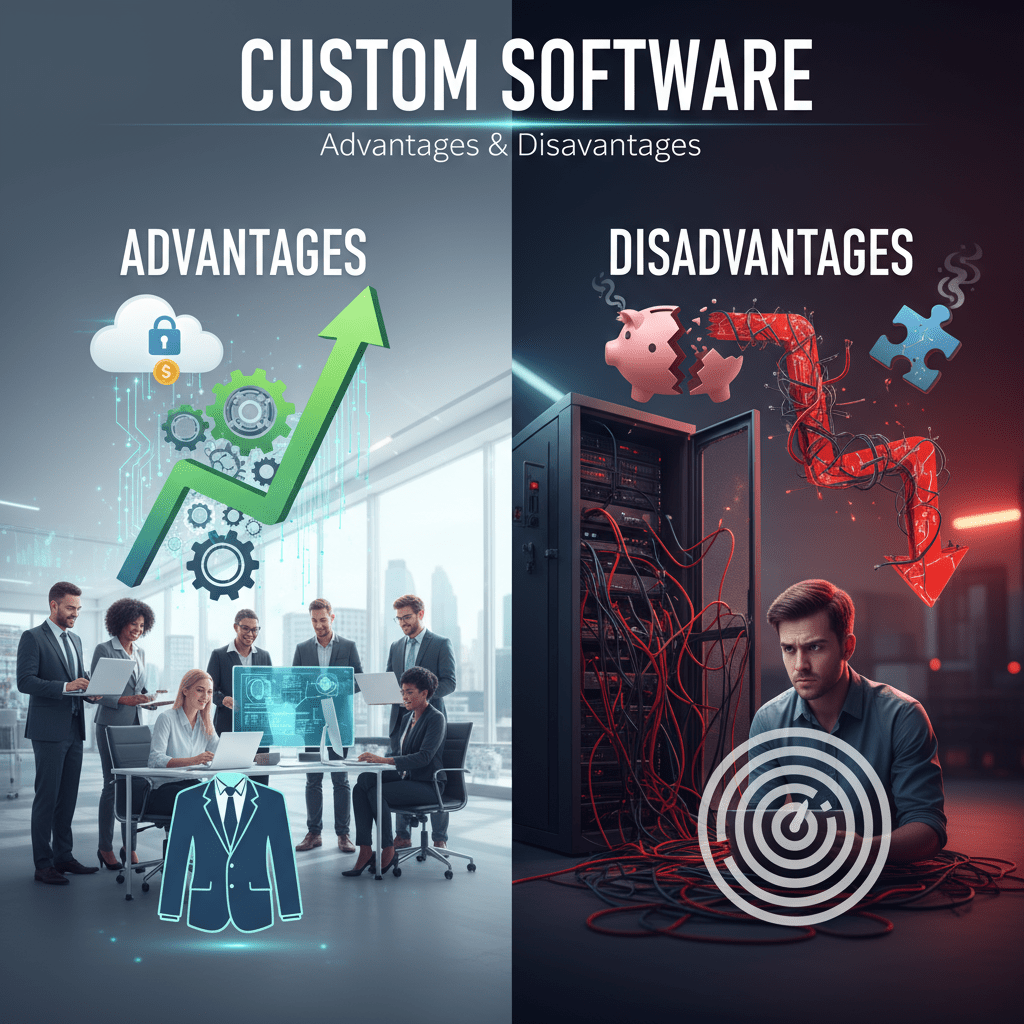
Custom Software: Is It Your Business’s Secret Weapon?
Hey there! Ever found yourself wrestling with off-the-shelf software, trying to make it fit your unique business like a square peg in a round hole? You know, those moments where you think, “If only it could just *do this one thing*…”? Yeah, we’ve all been there. It’s frustrating, right? That’s precisely why custom software development often pops up in conversations among business owners. But what exactly *is* it, and is it really all it’s cracked up to be? Let’s grab a virtual coffee and chat about the advantages and disadvantages of custom software.
### The Awesome Upsides: Why Go Custom?
So, why would anyone choose to build something from scratch when there are tons of ready-made solutions out there? Well, imagine trying to bake a cake for a very specific dietary need. You wouldn’t grab a generic mix, would you? You’d meticulously select each ingredient to ensure it’s perfect. Custom software is kind of like that perfect, bespoke cake.
First off, **it’s tailor-made for *your* business processes**. This is huge! Generic software often forces you to adapt *your* workflow to *its* limitations. With custom solutions, the software adapts to *you*. Think about a business with a super unique inventory management system, perhaps a boutique pottery studio with intricate firing schedules and drying times. Off-the-shelf CRM or inventory software just wouldn’t cut it. A custom solution would integrate every single nuance, making their operations run like a dream, boosting efficiency dramatically. This kind of bespoke development can genuinely transform how your business operates, making you more agile and competitive.
Secondly, **you own it, completely**. No subscription fees that suddenly hike up, no getting locked into a vendor’s roadmap that doesn’t align with your goals. You’re in the driver’s seat. This gives you incredible flexibility for future scaling and modifications. As your business evolves, so can your software, without needing to jump ship to a whole new system (and deal with all that messy data migration – ugh!). Plus, it can offer a real competitive advantage because you’ll have features and functionalities that your competitors simply don’t.
Finally, let’s talk about **security and integration**. When you control the development, you can build in robust security measures from the ground up, specifically addressing your industry’s compliance needs. And integration? Oh, it’s a dream! Custom software can talk seamlessly with your other existing systems –
your accounting software, your e-commerce platform, you name it. No more messy data transfers or manual entries between disparate systems. Companies like Digital Platforms specialize in creating these integrated, secure custom solutions, ensuring everything works together harmoniously and efficiently. They understand that a patchwork of different tools often creates more problems than it solves!
### The Not-So-Sunny Sides: What to Watch Out For
Okay, so custom software sounds pretty fantastic, right? But like anything good, it comes with its own set of challenges. It’s not a silver bullet, and it’s super important to go into it with open eyes.
The most obvious one? **The upfront cost and time investment.** Developing custom software isn’t a quick or cheap endeavor. It requires skilled developers, designers, and project managers, and they don’t come free. You’re looking at a significant initial investment, both financially and in terms of the time you’ll need to dedicate to planning, testing, and feedback. If you’re a small startup with limited funds, this might be a tough pill to swallow. It’s not like buying a ready-made app for a few dollars; we’re talking a serious development project here.
Then there’s the **ongoing maintenance and support**. Once it’s built, the work isn’t entirely over. Software needs updates, bug fixes, security patches, and sometimes, new features as your business grows. Who’s going to do all that? You’ll need to either retain your development team (or individual developers), or have an in-house team capable of handling it. This leads to additional costs and resource allocation you might not have anticipated. It’s a bit like owning a classic car – beautiful and unique, but it needs regular care and feeding!
Finally, be aware of the **potential for scope creep and project delays**. It’s easy to get excited and keep adding new features during development, which can blow up your budget and timeline. Clear communication, detailed planning, and a firm scope are absolutely critical. Without them, your dream software project can quickly turn into a never-ending saga. Choosing a reputable development partner, like Digital Platforms, who has a proven track record in project management and transparent communication, can significantly mitigate these risks. They know how to keep projects on track and within budget.
### Is Custom Software Right for *Your* Business?
So, after all that, how do you decide if custom software is the right path for your business? It really boils down to a few key questions:
* **Do existing solutions adequately meet your needs, or are you constantly compromising?** If you’re duct-taping multiple generic tools together and still struggling, custom might be worth considering.
* **Do you have truly unique processes that are central to your competitive advantage?** If your operations are what set you apart, bespoke software can amplify that advantage.
* **Do you have the budget and resources for the initial investment and ongoing maintenance?** Be realistic here!
* **Are you ready for a long-term commitment to a solution that will evolve with your business?**
If you’re nodding enthusiastically to most of those, then yes, custom software could be your business’s secret weapon, propelling you toward greater efficiency and growth.
### Ready to Explore Your Options?
Custom software isn’t for everyone, but for many businesses, it’s the strategic move that unlocks tremendous potential. It’s about investing in a tool that works precisely the way *you* do, giving you unparalleled control and flexibility.
Thinking about it? Don’t jump in blind! Do your research, clearly define your needs, and then reach out to experienced custom software development companies. They can help you assess your requirements, put together a detailed plan, and estimate costs. Who knows, your perfect custom solution might just be a conversation away!