Bill Gates Predicts Only 3 Jobs: The Future of Work Unveiled
Bill Gates Predicts Only 3 Jobs: Navigating Tomorrow’s Workforce
Ever wondered what the future of work holds? It’s a question that keeps many of us up at night, especially with the rapid evolution of technology. Well, one of the most influential minds of our time, Bill Gates, has offered a rather thought-provoking perspective. He suggests that in the not-so-distant future, the job market might look drastically different, with a surprising emphasis on just a few pivotal areas. Yes, you read that right: Bill Gates predicts only 3 jobs will be the bedrock of our economy.
This isn’t about job losses in the traditional sense, but rather a profound shift in what society values and what technology can’t easily replicate. It’s a fascinating look into the potential impact of artificial intelligence, automation, and our evolving global challenges. Let’s dive in and explore what these predictions mean for you, your career, and the world at large.
Table of Contents
- Bill Gates’ Vision: The Three Pillars of Future Employment
- The Rise of AI Prompters: Crafting Intelligence
- Energy Innovation: Fueling a Sustainable Future
- Biology and Health: The Next Frontier
- Preparing for What Bill Gates Predicts Only 3 Jobs Dominate
- Frequently Asked Questions About Future Jobs
- Conclusion: Embracing the Future of Work
Bill Gates’ Vision: The Three Pillars of Future Employment
When someone with the foresight of Bill Gates makes a prediction about the future of work, we tend to listen. He’s been a central figure in technological revolutions for decades, so his insights carry significant weight. From his perspective, as AI becomes more sophisticated and capable of handling complex tasks, certain jobs will inevitably diminish, while new, highly specialized roles will emerge. It’s not about machines taking over completely, but rather a redefinition of human contribution.
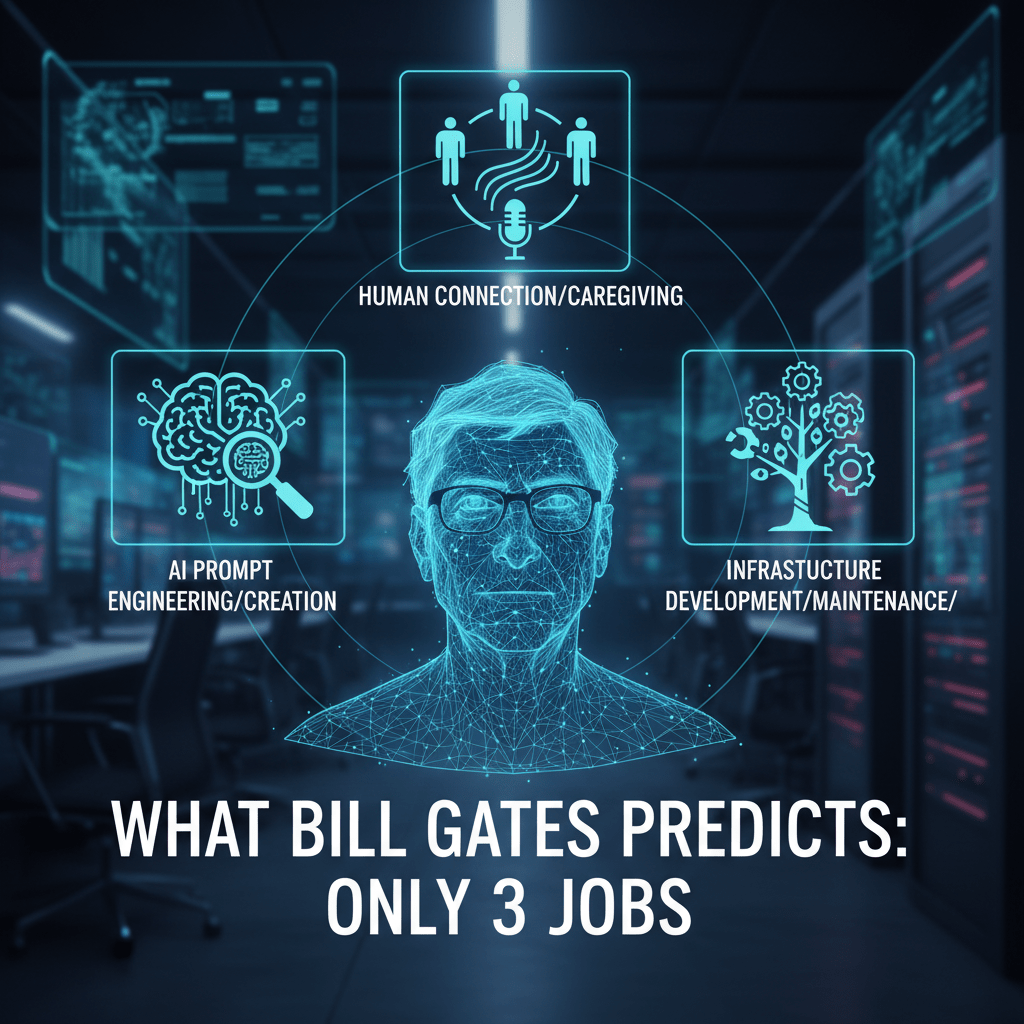
So, what exactly does Bill Gates predict will be the most crucial roles? He points to three distinct, yet interconnected, fields: AI prompting, energy innovation, and biological sciences. These aren’t just arbitrary choices; they represent areas where human creativity, ingenuity, and complex problem-solving remain paramount, even as technology advances. It’s an interesting thought, isn’t it? That all the diverse jobs we see today might coalesce into these core functions.
The Driving Forces Behind These Predictions
Why these three areas specifically? Gates’ predictions are rooted in several global mega-trends. Firstly, the explosive growth of artificial intelligence is fundamentally changing how we interact with technology and automate processes. Secondly, the urgent need for sustainable energy solutions is undeniable, driven by climate change and growing populations. Lastly, advancements in biology and healthcare continue to push the boundaries of human well-being and disease prevention.
Consider the profound impact each of these areas already has on our lives. AI is transforming industries, clean energy is a global imperative, and breakthroughs in medicine are constantly extending and improving human lives. It makes sense that the jobs associated with driving these changes will be highly valued and in demand.
The Rise of AI Prompters: Crafting Intelligence
The first job area in what Bill Gates predicts only 3 jobs will matter is a relatively new concept: AI Prompters. What exactly does an AI prompt engineer do? Think of it this way: AI, while incredibly powerful, still needs human guidance to perform optimally. It’s like having a brilliant but sometimes literal-minded assistant; you need to know how to ask the right questions to get the desired outcome.
An AI prompter is essentially a translator between human intent and artificial intelligence. They design, refine, and optimize the prompts used to communicate with AI models, ensuring the AI produces accurate, relevant, and creative results. This role requires a unique blend of technical understanding, linguistic precision, and critical thinking. It’s about more than just typing a question; it’s about understanding the AI’s architecture and how to best elicit its capabilities.
Skills for the AI Prompt Engineer
- Linguistic Fluency: A deep understanding of language, nuance, and context.
- Critical Thinking: The ability to analyze AI outputs and identify areas for improvement.
- Problem-Solving: Crafting prompts to tackle complex challenges and achieve specific goals.
- Domain Expertise: Knowing the subject matter well enough to guide the AI effectively.
- Creativity: Thinking outside the box to unlock new possibilities with AI.
For businesses looking to harness the power of AI, roles like these are becoming indispensable. At Digital Platforms, for example, our expertise in AI system development isn’t just about building the technology; it’s also about ensuring our clients can effectively integrate and utilize these powerful tools. We understand the critical link between robust AI infrastructure and the human intelligence required to prompt it effectively, making sure our clients gain genuine competitive advantages.
Energy Innovation: Fueling a Sustainable Future
The second sector that Bill Gates predicts only 3 jobs will feature prominently is Energy Innovation. Our planet faces an unprecedented challenge: meeting the growing energy demands of a global population while simultaneously combating climate change. This isn’t just an environmental issue; it’s an economic and geopolitical one. The transition to clean, sustainable energy sources is one of the most critical endeavors of our time, and it requires immense human ingenuity.
Jobs in this field aren’t just about scientists in labs. They encompass a vast array of roles: engineers developing new solar panel technologies, urban planners designing smart grids, policy analysts advocating for renewable energy policies, skilled tradespeople installing wind turbines, and entrepreneurs launching sustainable energy startups. It’s a sector brimming with opportunities for those passionate about making a tangible difference.
The Demand for Green Skills
The renewable energy sector is experiencing significant growth. According to the International Renewable Energy Agency (IRENA), the global renewable energy sector employed 13.7 million people in 2022, an increase of one million jobs from 2021. This trend is only expected to accelerate as nations commit to net-zero targets. What does this mean for you? It means a strong demand for skills related to:
- Renewable energy engineering (solar, wind, geothermal, hydro)
- Battery storage and grid modernization
- Energy efficiency and conservation
- Environmental science and climate modeling
- Policy and regulatory expertise for sustainable practices
The push for decarbonization isn’t just a fleeting trend; it’s a foundational shift in how we power our world. The ability to innovate and implement these energy solutions will be crucial, creating a robust job market for decades to come. How will your industry adapt to these profound energy transformations?
Biology and Health: The Next Frontier
Finally, what Bill Gates predicts only 3 jobs will truly dominate includes the vast and ever-expanding field of Biology and Health. From understanding the complexities of the human genome to developing new vaccines and personalized medicines, the biological sciences are at the forefront of extending and enhancing human life. The COVID-19 pandemic, for instance, highlighted the critical importance of biotech research and rapid medical innovation.
This sector isn’t confined to laboratories. It includes doctors, nurses, and healthcare professionals; biotechnologists developing new treatments; geneticists pioneering gene editing; bioinformaticians analyzing massive datasets; and public health experts strategizing global health initiatives. The intersection of biology with technology, particularly AI and data science, is creating entirely new sub-fields and career paths.
Innovation at the Intersection of Tech and Life Science
The synergy between biology and technology is particularly exciting. Imagine custom software solutions that can analyze complex medical imaging far faster than the human eye, or AI models that predict disease outbreaks with uncanny accuracy. This is where innovation truly thrives.
For example, personalized medicine, which tailors treatments to an individual’s genetic makeup, is rapidly becoming a reality. This requires a deep understanding of genetics, bioinformatics, and the ability to interpret vast amounts of biological data. The skills needed are diverse, ranging from:
- Biomedical engineering
- Genomics and proteomics
- Pharmacology and drug discovery
- Clinical research and trials
- Public health and epidemiology
The potential for groundbreaking discoveries in biology is limitless, and the jobs in this field will continue to be vital for the well-being of humanity. It truly is a grand challenge, isn’t it?
Preparing for What Bill Gates Predicts Only 3 Jobs Dominate
So, if Bill Gates predicts only 3 jobs will really matter, how do you prepare for such a future? It’s not about rushing to change careers overnight, but rather cultivating a mindset of adaptability and continuous learning. The core message here is that skills that complement technology, rather than being replaced by it, will be critical.
Think about the underlying abilities that connect AI prompting, energy innovation, and biology breakthroughs: critical thinking, complex problem-solving, creativity, interdisciplinary understanding, and a willingness to learn. These “soft skills” coupled with specialized knowledge will be your greatest assets.
Strategies for a Future-Ready Career
- Embrace Lifelong Learning: The days of learning a trade once and being set for life are largely over. Dedicate yourself to continuous upskilling and reskilling. Online courses, certifications, and even self-study can be incredibly valuable.
- Develop Interdisciplinary Skills: Don’t silo yourself. A bio-engineer who understands AI, or an energy expert with strong communication skills, will be invaluable. Look for ways to connect different fields.
- Focus on Human-Centric Abilities: Skills like emotional intelligence, negotiation, creativity, and strategic thinking are inherently human and difficult for AI to replicate. These will become even more prized.
- Stay Informed: Keep an eye on technological advancements and global trends. Reading reports from institutions like the World Economic Forum or publications about Bill Gates Foundation initiatives can provide excellent insights.
- Network Effectively: Connect with professionals in emerging fields. You never know where your next opportunity might come from.
The future of work might seem daunting, but it’s also filled with incredible opportunities for those who are prepared. By focusing on these core areas and developing adaptable skills, you can position yourself to thrive, no matter what tomorrow brings. For businesses, partner with professionals like Digital Platforms to develop forward-thinking social media marketing strategies to attract this new generation of talent.
Frequently Asked Questions About Future Jobs
What 3 jobs does Bill Gates predict will be most important in the future?
Bill Gates identifies AI prompts, energy, and biology as the three most critical and enduring job sectors for the future, driven by technological advancements and societal needs.
How will AI affect the job market according to Bill Gates?
Gates believes AI will significantly reshape the job market, automating many tasks but also creating new opportunities, particularly in areas where human creativity, interaction, and complex problem-solving are essential. This shift necessitates upskilling and adapting to new roles.
Are Bill Gates’ predictions about future jobs always accurate?
While Bill Gates has a remarkable track record of foresight in technology, like any prediction about the future, his forecasts are based on current trends and educated guesses. The actual evolution of the job market can be influenced by many unforeseen factors, but his insights provide valuable guidance.
What skills should I develop to thrive in the future job market?
To thrive, focus on skills that complement AI, such as creativity, critical thinking, complex problem-solving, emotional intelligence, and interdisciplinary knowledge, especially in areas like AI prompting, clean energy, and biological innovation. Continuous learning will be crucial.
Will automation lead to massive job losses, as predicted by some?
While automation will undoubtedly displace some existing job roles, the consensus among many experts, including Gates, is that it will also create new types of jobs and transform others. The key will be an adaptive workforce capable of leveraging new technologies rather than being replaced by them.
Conclusion: Embracing the Future of Work
The idea that Bill Gates predicts only 3 jobs will dominate the future isn’t meant to cause alarm, but rather to spark a conversation about economic evolution. It’s a powerful reminder that the job market is dynamic, constantly shifting with technological tides and societal needs. While the specifics might evolve, the underlying principles of adaptability, innovation, and human-centric skills will always hold true.
Whether you’re an individual planning your career path or a business strategizing for future growth, understanding these trends is paramount. The industries of AI prompting, energy innovation, and biological sciences are not just buzzwords; they represent global challenges and opportunities that will define our century. By focusing on these areas and cultivating a versatile skillset, we can not only cope with the future of work but actively shape it. The future isn’t just coming; it’s already here, and it’s calling for ingenuity, curiosity, and a willingness to learn.
For information or free consultation, visit our services pages and send us an email: www.digitalplatforms.co.za.