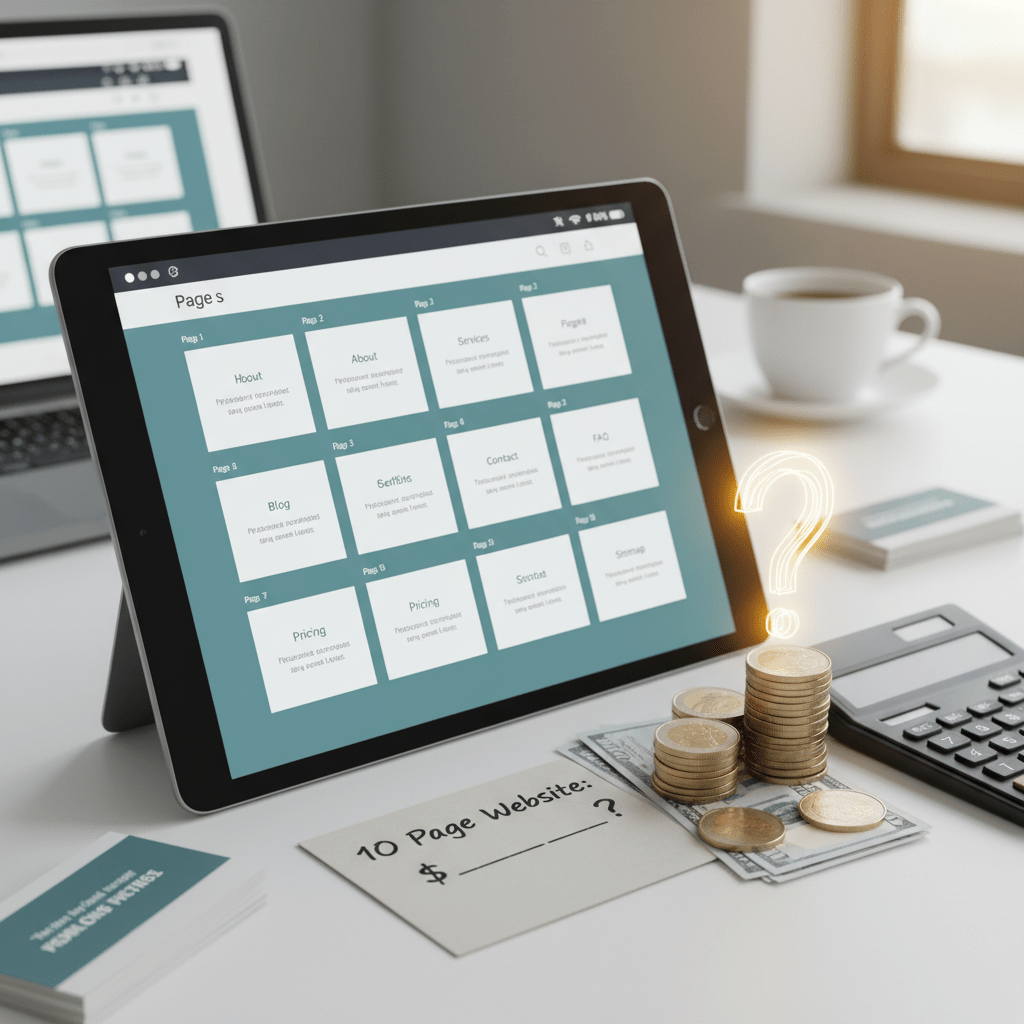
10 Page Website Cost: How Much Should You Charge?
10 Page Website Cost: How Much Should You Charge?
Ever found yourself staring at a blank screen, wondering, “How much should I charge for a 10 page website?” It’s a common dilemma for freelancers, agencies, and even small business owners looking to budget for their online presence. Pricing a website isn’t like buying groceries; it’s a dynamic process influenced by a multitude of factors. You’re not just selling pages; you’re selling a digital storefront, a marketing tool, and a brand’s online identity. Navigating the nuances of web development pricing can feel like walking through a minefield, but don’t worry, we’re here to light the way!
In this comprehensive guide, we’ll break down everything that goes into determining a fair and profitable 10 page website cost. By the end, you’ll have a clear understanding of how to estimate projects accurately, communicate value to clients, and ensure you’re compensated appropriately for your expertise.
Table of Contents
- Understanding the Basics of Website Pricing
- Key Factors Influencing 10 Page Website Cost
- Breaking Down the Cost Components
- How to Calculate Your 10 Page Website Cost
- Balancing Value and Profitability
- Client Communication and Contracting
Understanding the Basics of Website Pricing
Before we dive deep into the specifics of a 10 page website, let’s establish some foundational principles. Website pricing isn’t just about the number of pages; it’s about the value you deliver. Think of it like buying a car—a small sedan and a luxury SUV both have four wheels and an engine, but their prices vary dramatically based on features, performance, and brand prestige. The same applies to web development.
The “It Depends” Factor
You’ll hear “it depends” a lot in web development pricing, and for good reason! The scope of work, client expectations, and your own skill level all play a huge role. A simple informational 10 page website cost for a local business will be vastly different from a highly interactive, custom-designed site for a growing startup. Are both 10 pages? Yes. Are they the same project? Absolutely not.
According to Statista, the web development market is expected to grow, indicating a strong demand for diverse website solutions. This diversity means a one-size-fits-all pricing model simply won’t cut it. Understanding web development industry trends is crucial.
Hourly Rate vs. Fixed Project Price
Should you charge by the hour or offer a fixed price? This is a perennial debate among web professionals. Hourly rates provide flexibility, especially when a project’s scope isn’t perfectly defined. It ensures you’re compensated for every minute spent. However, clients often prefer the predictability of a fixed project price for budgeting purposes. Ultimately, even if you offer a fixed price, you should always base it on an estimate of your hourly rate multiplied by the anticipated hours, plus a buffer for unforeseen issues.
Key Factors Influencing 10 Page Website Cost
Let’s get down to the nitty-gritty. What truly drives the price for a 10 page website cost? It’s a combination of design, functionality, content needs, and ongoing support. Each of these elements adds layers of complexity and time, directly impacting your final quote.
Design Complexity and Customization
- Template-based vs. Custom Design: A website built on a pre-made template (like those from WordPress, Squarespace, or Wix) is generally quicker and less expensive. A fully custom design, tailored to the client’s brand identity, requires significantly more time for conceptualization, wireframing, and design iteration.
- UI/UX Design: Beyond aesthetics, good User Interface (UI) and User Experience (UX) design ensure the site is intuitive and easy to navigate. This involves mapping user journeys, creating compelling calls-to-action, and optimizing for conversions. This critical step adds significant value and time.
Features and Functionality
What does the website actually *do*? This is where a lot of the cost variation comes in. A basic brochure site displays information, but most clients need more. Think about:
- Contact Forms: Simple forms are standard, but advanced forms with conditional logic or integrations cost more.
- E-commerce Capabilities: Selling products online (even just a few) adds a huge layer of complexity, including product management, payment gateways, shipping, and security.
- Integrations: Does the site need to connect to CRM systems, email marketing platforms, booking systems, or social media feeds? Each integration requires custom development or configuration.
- CMS (Content Management System) Setup: Most clients want to update their own content. Setting up and customizing a CMS like WordPress (which still requires development expertise despite being “easy to use”) adds to the cost.
- Special Features: Blogs, portfolios, image galleries, video embeds, membership areas, search functionality – each feature adds development time.
Content Creation and Optimization
Content is king, but who’s creating it? High-quality content is vital for SEO and engaging visitors. Many clients underestimate this aspect. Are you:
- Writing all the copy for 10 pages?
- Optimizing existing content for search engines?
- Sourcing and editing images or videos?
If you’re responsible for content, be sure to factor that into your pricing strategy. It’s often where projects stall if not openly discussed.
Breaking Down the Cost Components
When you’re determining the 10 page website cost, it’s helpful to think of it in distinct phases, each with its own associated labor and expenses.
Discovery and Planning
This crucial initial phase involves understanding the client’s business, goals, target audience, and competition. It includes:
- Initial Consultations: Meeting with the client to gather detailed requirements.
- Project Scope Definition: Documenting features, functionalities, and deliverables.
- Wireframing & Sitemap Creation: Planning the site’s structure and user flow.
- Technology Stack Selection: Deciding on the appropriate platforms and tools.
This phase is paramount. Skipping it leads to scope creep and unhappy clients. Smart planning makes for a smoother project.
Design Phase
This is where the visual identity takes shape. It encompasses:
- Mockups & Prototypes: Creating visual representations of key pages.
- Style Guide Development: Defining fonts, colors, imagery, and branding elements.
- Revisions: Incorporating client feedback.
Remember, more revisions mean more time spent. Set clear limits on revision rounds in your contract.
Development Phase
This is the actual coding and building of the website. It involves:
- Front-End Development: Building the user-facing parts of the site (HTML, CSS, JavaScript).
- Back-End Development: Setting up the server, database, and integrating functionalities (e.g., CMS, e-commerce).
- Cross-Browser/Device Compatibility: Ensuring the site looks and functions well on all browsers and devices (responsive design).
This is often the most time-consuming part, especially for custom features. Companies like Digital Platforms excel in custom software development, ensuring robust and scalable solutions, which directly impacts the complexity and therefore the 10 page website cost.
Testing and Launch
Before unveiling the site to the world, thorough testing is essential:
- Functional Testing: Ensuring all features work as intended.
- Usability Testing: Checking for ease of use and navigation.
- Performance Testing: Optimizing for speed and efficiency.
- Security Audits: Identifying and fixing vulnerabilities.
- Pre-Launch Checks: Setting up analytics, SEO basics, and ensuring all links work.
Post-Launch Support & Maintenance
A website is never truly “finished.” Ongoing support is vital:
- Hosting & Domain Management: Often an annual cost, but initial setup is part of development.
- Security Updates: Protecting against threats and vulnerabilities.
- Backups: Regular data protection.
- Content Updates: Small changes or additions.
- Performance Monitoring: Keeping the site fast and reliable.
Offering a maintenance package post-launch is a great way to provide added value and recurring revenue. Many businesses, especially small ones, appreciate having a dedicated team for ongoing support. For example, businesses trust Digital Platforms for their comprehensive web development and ongoing maintenance, knowing their online presence is in professional hands.
How to Calculate Your 10 Page Website Cost
Now for the million-dollar question: how do you put a number on all of this? While every project is unique, here’s a framework for estimating your 10 page website cost.
Estimate Your Time for Each Component
Break down each phase and component into estimated hours. Be realistic and add a buffer!
- Discovery & Planning: 5-15 hours
- Design (Wireframes, Mockups, Revisions): 10-40 hours (more for custom design)
- Content Integration: 5-15 hours (if content is provided; significantly more if you create it)
- Development (Front-End & Back-End): 30-100+ hours (highly dependent on complexity and functionality)
- Testing & Debugging: 5-15 hours
- Launch & Deployment: 3-8 hours
- Project Management & Communication: 5-15 hours (don’t forget this!)
For a moderately complex 10-page site, you could easily be looking at 80-200+ hours. A simple static site might be less, but a feature-rich one could easily exceed this.
Determine Your Hourly Rate
Your hourly rate depends on your experience, location, overheads, and desired income. Are you a junior freelancer or a seasoned agency? Research average web design rates in your area. For instance, a small business website price varies widely globally. In the US, average web developer charges can range from $75-$150/hour or more for agencies. Ensure your rate covers your time, taxes, software, and tools, and allows for profit.
Add Soft Costs and Contingency
- Software & Tools: Licensing fees for design software, development tools, project management apps.
- Stock Assets: High-quality images, icons, and fonts if not provided by the client.
- Third-Party Services: Premium plugins, APIs, or specialized functionalities.
- Contingency Buffer: Always, always add a 10-20% buffer for unexpected issues, client delays, or scope creep. It’s better to slightly overestimate and deliver early than to underestimate and face losses.
So, if your estimated total hours are 120 and your hourly rate is $100, that’s $12,000. Add a 15% contingency ($1,800) and any software costs, and you’re looking at a base price around $14,000.
For a basic informational 10 page website, average costs can range anywhere from $3,000 to $10,000+. However, for a more customized site with specific integrations or e-commerce functionality, the cost could easily climb to $15,000 – $30,000+. This is why getting detailed web design quotes is so important.
Balancing Value and Profitability
Ultimately, your pricing should reflect both the value you provide to the client and your profitability. It’s not just about covering costs; it’s about making a sustainable business.
Value-Based Pricing
Consider the client’s potential ROI (Return on Investment). If your website helps a business generate $50,000 in new sales, a $10,000 website is a fantastic investment for them. Frame your price not as a cost, but as an investment into their business growth. What problems are you solving? What opportunities are you creating?
Tiered Pricing Models
For a 10 page website, offering tiered packages (e.g., Basic, Standard, Premium) can be effective. Each tier offers different features, levels of customization, or post-launch support. This allows clients to choose a package that fits their budget and needs, while also streamlining your offering.
- Basic (Template-based, essential pages, simple contact form): Lower entry point.
- Standard (Semi-custom design, blog setup, some integrations): Most popular option, good balance.
- Premium (Full custom design, e-commerce, advanced features, extensive SEO optimization): High value, for clients with specific needs.
Remember, understanding your competition’s pricing is good, but don’t undervalue your own expertise. Your unique skills, experience, and the quality of your output justify your rates.
Client Communication and Contracting
Transparency is key when discussing the 10 page website cost. Clear communication prevents misunderstandings and ensures a smooth project flow.
Be Transparent About Costs
Walk your client through your proposal, explaining every component and why it’s necessary. Help them understand what they’re paying for. If they’re asking “how much to build a website?”, always provide a detailed breakdown so they can see the value.
The Power of a Solid Contract
A detailed contract or Statement of Work (SOW) is your best friend. It should clearly outline:
- The scope of work (what’s included, what’s not).
- Deliverables for each phase.
- Payment schedule and terms.
- Revision limits.
- Project timeline.
- Contingency for scope changes.
- Intellectual property rights.
This protects both you and the client and reduces arguments later on. For complex projects, even a small business website can benefit from a professional contract.
FAQ
Here are some frequently asked questions about pricing web development projects:
Q: What is the average 10 page website cost?
A: The average 10 page website cost can range significantly, typically from $3,000 to $10,000+, depending on complexity, features, and the professional’s experience. Basic brochure sites will be at the lower end, while e-commerce or highly customized sites will be higher.
Q: Should I charge hourly or a fixed price for a 10 page website?
A: For a 10 page website, a fixed-price model is often preferred by clients for budgeting predictability. However, ensure your fixed price accurately reflects all potential work, contingency, and your hourly rate. Charging hourly might be better for projects with undefined scope.
Q: What factors most influence the cost of a 10 page website?
A: Key factors influencing the cost of a 10 page website include design complexity (custom vs. template), functionality (e.g., e-commerce, forms, integrations), content creation needs, overall web development rates, ongoing maintenance, and the experience level of the web developer or agency.
Conclusion
Determining the right price for a 10 page website cost is an art and a science. It’s about meticulously planning, accurately estimating your time and value, and then confidently communicating that value to your clients. Remember, you’re not just providing a service; you’re offering a solution that can significantly impact their business.
Don’t be afraid to charge what you’re worth. Underpricing yourself not only devalues your work but can also lead to burnout and less satisfied clients in the long run. By following the steps outlined above – from understanding project complexity to transparent communication and robust contracting – you’ll be well on your way to fair and profitable pricing for all your web development projects. And if you ever need expert consultation or need a reliable team to execute a complex web development project, remember that Digital Platforms offers top-tier web development services, turning visions into successful online realities with a proven track record of happy clients.
For information or free consultation, visit our services pages and send us an email: www.digitalplatforms.co.za.